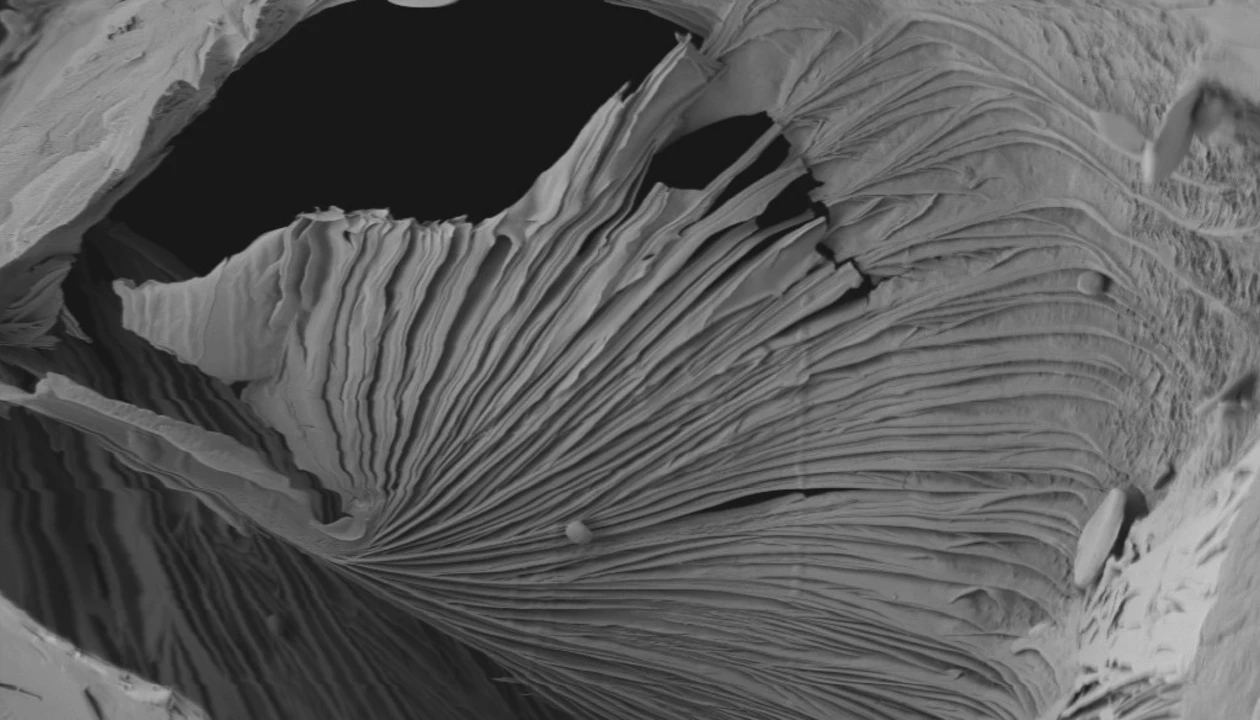
Researchers at IIT Indore are exploring the potential of gelatin methacrylate combined with zwitterionic molecules for applications in tissue engineering. This investigation aims to develop innovative materials that could enhance cellular growth without the ongoing need for external growth factors. The study is led by Parul Yadav, who recently captured an intriguing image of the materials using an electron microscope.
Nature’s Aesthetic Reflected in Research
The image taken by Yadav showcases a unique finned texture reminiscent of the underside of a mushroom, while a Fibonacci spiral appears to echo the natural patterns found in mollusk shells. This visual representation illustrates the distinct “stratified, radially propagating fracture morphology” that results from the light-driven copolymerization of gelatin methacrylate and zwitterionic molecules, as described by Yadav.
The research team at IIT Indore aims to integrate biologically active groups into this polymer structure. The hope is that this integration will facilitate the growth of various cellular features, including astrocytes and myotubes. This could significantly impact how tissues are engineered, potentially reducing reliance on external growth factors that are typically required in cellular cultivation.
Future Implications for Tissue Engineering
The implications of this research extend beyond simple aesthetics. By creating a supportive environment for cell growth, the team envisions a future where complex tissues can be engineered more efficiently. The ability to nurture cells without the continuous addition of growth factors could lead to advancements in regenerative medicine and other health-related fields.
This work aligns with broader trends in material science and biotechnology, where researchers are increasingly looking to nature for inspiration. By mimicking natural structures and processes, scientists can develop innovative solutions to complex problems in medicine and engineering.
Yadav’s work not only contributes to scientific knowledge but also highlights the intersection of art and science. The aesthetic qualities of the materials studied offer a glimpse into the beauty of scientific exploration, inviting both curiosity and appreciation.
In addition to their research, Yadav and her colleagues are participating in a photo contest that encourages scientists to capture the beauty of their work through images. This initiative promotes engagement with science through visual storytelling, underscoring the importance of communication in the scientific community.
As this research progresses, the team at IIT Indore is optimistic about the potential applications of their findings in tissue engineering and beyond. By continuing to explore the properties of gelatin methacrylate and its combinations, they aim to push the boundaries of what is possible in biomedical engineering.