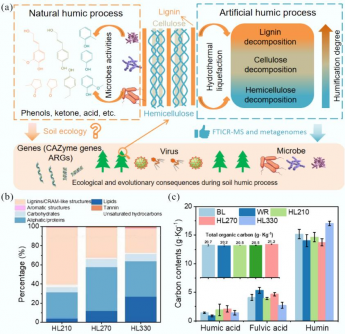
A recent study has highlighted the unexpected relationship between humic substances and antibiotic resistance in soil ecosystems. Conducted by a team led by Xiangdong Zhu from the Chinese Academy of Sciences, the research was published on December 5, 2025, in the journal Agricultural Ecology and Environment. The findings indicate that humic substances formed from crop residues at elevated temperatures can stimulate microbial metabolism and promote the accumulation of antibiotic resistance genes (ARGs).
Each year, billions of tons of lignocellulosic biomass, primarily from agricultural residues, enter soils globally. These materials undergo a natural process known as humification, which is essential for maintaining soil fertility and carbon sequestration. Despite its ecological importance, the molecular composition of organic matter is not neutral. It influences how microbes access carbon and energy, how viruses interact with their hosts, and how resistance traits circulate within soil ecosystems.
Previous research has established that organic inputs can affect microbial stress responses and antibiotic resistance. Still, the precise role of humic substances derived from lignocellulose, particularly phenolic compounds from lignin, has remained largely unexamined. The current study aims to fill this gap by investigating how these substances regulate soil microbial metabolism and resistance traits.
To simulate natural humification, the researchers employed controlled thermal treatments of rice straw at temperatures of 210, 270, and 330 °C. These conditions correspond to the progressive decomposition of hemicellulose, cellulose, and lignin. The artificial humic substances produced—designated as HL210, HL270, and HL330—were chemically characterized using advanced techniques, including excitation-emission matrix (EEM) fluorescence spectroscopy and gas chromatography-mass spectrometry (GC-MS).
The team subsequently added these substances to paddy soils at equal total organic carbon concentrations to isolate the effects of composition on microbial functional responses. The results revealed that as the hydrothermal temperature increased, there was a notable transformation of lignin-derived structures into lipids and aliphatic compounds, alongside a rise in phenolic compound concentrations. These compositional changes significantly impacted microbial carbon metabolism.
The study found that carbohydrate-active enzyme (CAZyme) genes, crucial for the breakdown of complex carbohydrates, accounted for 97.8% of the total CAZymes. The relative abundance of glycoside hydrolases (GH) increased from approximately 61% to 84% as the temperature rose from HL210 to HL330. This shift indicates an enhanced capacity for microbial degradation of carbohydrates and cell wall components.
Additionally, the research highlighted a marked enrichment of phage-encoded CAZyme auxiliary metabolic genes (AMGs) in soils treated with HL270 and HL330. This supports the hypothesis of a “Piggyback the Winner” strategy, where viruses enhance host carbon metabolism to promote mutual persistence.
Crucially, the study also documented a significant increase in ARG abundance, which rose stepwise with the degree of humification, peaking at a 4.6-fold increase in HL330-treated soils. The enriched ARGs were primarily associated with antibiotic efflux, target protection, and inactivation, with key contributions from microbial groups such as Proteobacteria, Acidobacteria, Firmicutes, and Chloroflexi. Metagenome-assembled genome (MAG) analysis further confirmed the dominance of Proteobacteria and identified specific taxa, including Pseudomonadaceae sp. upd67 and Enterobacter kobei, that thrived under high-temperature conditions.
These findings underscore a critical trade-off in residue management. While humification processes enhance soil carbon storage and fertility, they may inadvertently foster conditions that promote the spread of antibiotic resistance in agricultural soils. Understanding this balance is essential for developing sustainable practices for residue return, soil amendments, and carbon management strategies that maximize ecological benefits while minimizing potential risks.
The research was supported by the National Natural Science Foundation of China under Grant No. 22276040. The results are poised to reshape approaches to crop residue management, emphasizing the need for careful consideration of both soil health and microbial resistance dynamics.