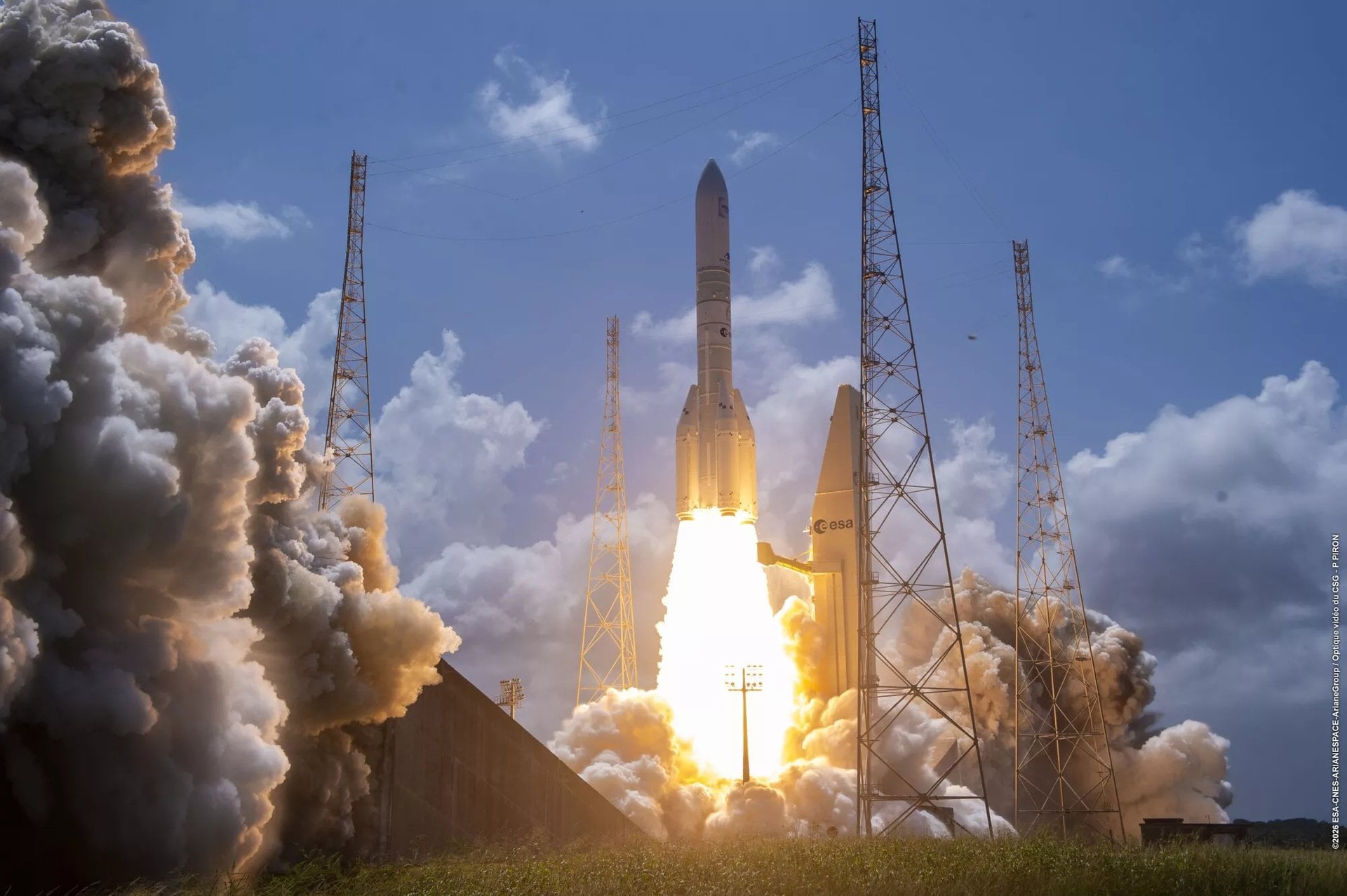
SpaceX successfully launched 25 Starlink satellites on February 5, 2025, from the Vandenberg Space Force Base in California. This mission, designated Starlink 17-32, aims to enhance the global broadband internet service provided by the rapidly expanding satellite constellation. With this latest addition, the total number of satellites in low Earth orbit exceeds 9,600, according to renowned orbital tracker and astronomer Jonathan McDowell.
Launch Details and Mission Objectives
The liftoff occurred at 7:38 a.m. PST (10:38 a.m. EST / 15:38 UTC) from Space Launch Complex 4 East. The Falcon 9 rocket followed a south-southwesterly trajectory as it ascended into the sky. This mission utilized the Falcon 9 booster with the tail number B1071, marking its 31st flight. The rocket’s previous missions included five launches for the National Reconnaissance Office, five small satellite rideshare missions, and NASA’s Surface Water and Ocean Topography (SWOT) mission.
Following liftoff, the booster is expected to land on the drone ship, Of Course I Still Love You, stationed in the Pacific Ocean. If all goes as planned, this would represent the 175th landing on this vessel and the 567th successful booster landing overall for SpaceX.
Impact on Global Connectivity
The Starlink project, which aims to provide high-speed internet access worldwide, continues to grow its satellite network. Each launch brings SpaceX closer to its goal of making reliable internet service available to underserved and remote areas. The addition of these 25 satellites is crucial for further enhancing the performance and reliability of the service, which has already served millions of users globally.
With the successful execution of this mission, SpaceX reinforces its position as a leader in the commercial space industry. The ongoing development of the Starlink constellation is a key part of the company’s broader strategy to combine satellite technology with innovative rocket launch capabilities, thus pushing the boundaries of space exploration and connectivity.
Live coverage of the launch was provided by Spaceflight Now, starting approximately 30 minutes prior to liftoff, allowing viewers to witness this significant achievement in real time.