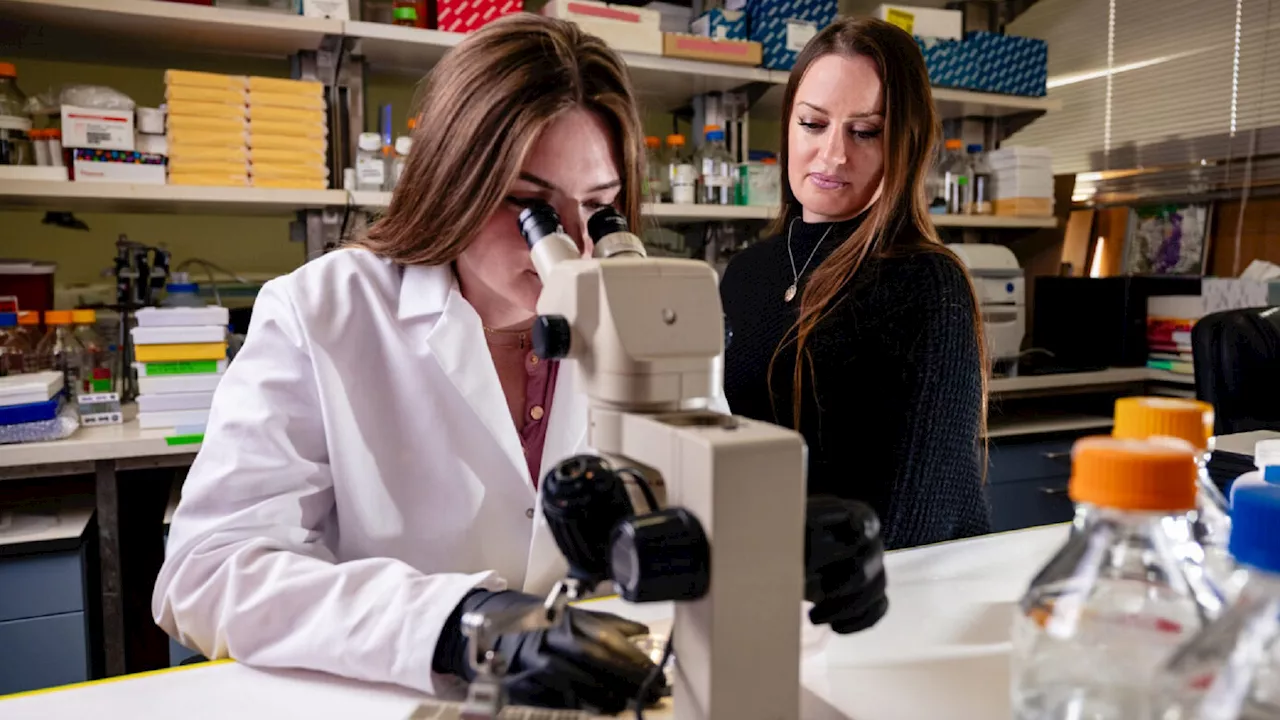
Researchers at Texas A&M University have made a groundbreaking discovery that could significantly advance the field of limb regeneration. They have identified a protein known as FGF8 that is capable of regenerating an entire finger joint, a finding that could pave the way for future limb regeneration in humans. This advancement holds particular promise for the estimated 2.1 million Americans currently living with limb loss, a number expected to more than triple by 2060 as cases of diabetes and vascular diseases rise.
While certain animals, such as salamanders, can naturally regenerate lost limbs, humans have a limited capacity for regeneration, typically able to regrow only the tips of fingers under very specific conditions. The researchers at Texas A&M’s College of Veterinary Medicine and Biomedical Sciences believe they have uncovered a critical element necessary for more extensive regeneration. Their study focused on a specific fibroblast growth factor, which is a type of protein that plays a key role in tissue development and healing.
FGF8: A Key to Regeneration
Dr. Lindsay Dawson, an assistant professor in the Department of Veterinary Physiology and Pharmacology, highlighted the significance of this research. “We know that bone regeneration requires many different factors, one of which is FGFs,” she stated. Through their experiments, the team discovered that FGF8 could regenerate a complete finger joint, including articular cartilage, tendons, and ligaments.
While the regenerated tissue did not include all recognizable elements, such as a fingernail, Dr. Dawson emphasized that this breakthrough marks an important step towards the possibility of full limb regeneration. The findings reveal that FGF8 has the potential to guide cells in reconstructing complex tissue structures, effectively overriding the body’s natural inclination to form scars following injuries.
“This study is a proof of concept,” Dr. Dawson explained. “These cells would normally undergo scar formation, but FGF8 tells them to do something else, and they end up making five tissues. We were amazed at how much this one factor can do.”
Implications for Future Research
The ultimate aim of the researchers is to identify all the biological signals needed for the full regrowth of human limbs. Dr. Dawson stated, “Our expectation is that if we can figure out all the factors that regenerate a finger, then we could apply those factors anywhere on the rest of the arm, or even a leg, and regrow a limb.”
This discovery also has significant implications for treating degenerative conditions, such as arthritis, where repairing joint cartilage remains a major medical challenge. Graduate student Sarah Wolff, who is working under Dr. Dawson, expressed her enthusiasm for the next phase of research. “We’ve discovered that joint regeneration is associated with less mature tissues,” she noted. “What I’m really driven to understand is how we can stimulate joint regeneration across the lifespan.”
If their research proves successful, it could revolutionize medicine, bridging the gap between healing wounds and achieving true regeneration—a capability that has primarily been observed in the animal kingdom. The team at Texas A&M stands at the forefront of a potential medical revolution, one that could change the lives of millions dealing with limb loss and related conditions.