The speculation surrounding a power plant near the San Francisco 49ers’ practice facility has raised concerns about its potential impact on player injuries. During a recent press conference, general manager John Lynch and head coach Kyle Shanahan addressed these theories, which have gained traction among fans and former players.
The 49ers have faced a series of significant injuries this season, leading to questions about whether the electromagnetic waves from the substation are a contributing factor. Lynch acknowledged the ongoing discussions, stating, “Our guys have been reaching out to anyone and everyone to see, does a study exist other than a guy sticking an apparatus underneath the fence and coming up with a number that I have no idea what that means.”
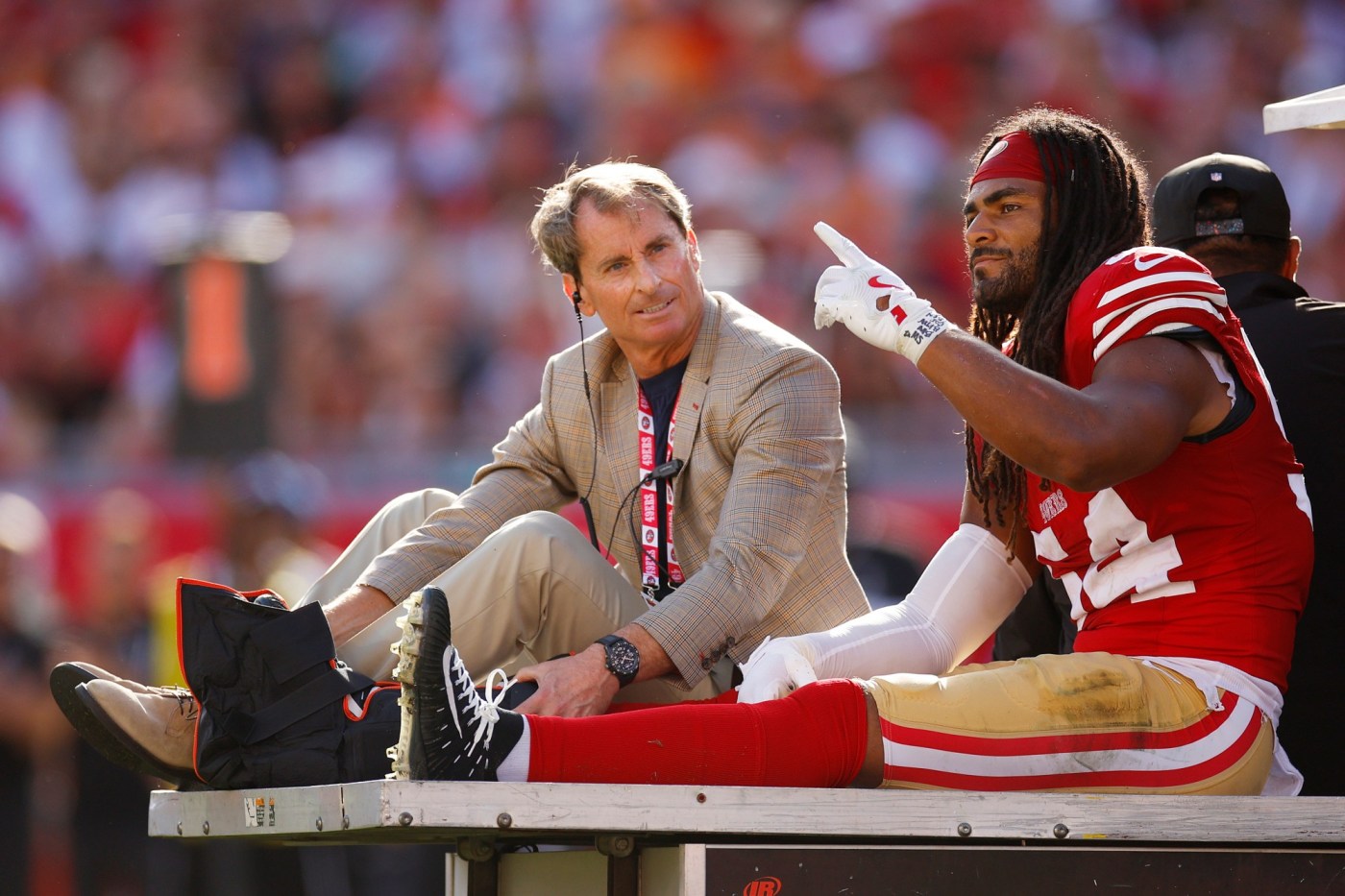
Despite the skepticism, the injuries have been substantial. Players like Nick Bosa (torn ACL), Fred Warner (fractured and dislocated ankle), George Kittle (hamstring and Achilles issues), Brock Purdy (turf toe), and Mykel Williams (torn ACL) have all been sidelined. Lynch indicated that the high-profile nature of these injuries has intensified scrutiny around the topic.
While some former players, including Taybor Pepper and Jon Feliciano, have fueled the conversation on social media, the notion that free agents may avoid signing with the 49ers due to the substation appears unfounded. Lynch pointed out that throughout the team’s history, including its time in Santa Clara since 1988, many successful seasons have occurred despite the facility’s location.
The 49ers, who moved to their current site with Levi’s Stadium opening in 2014, will also host Super Bowl LX in the venue, suggesting that there is confidence in the facility’s safety. Lynch humorously remarked on the absurdity of the claims, noting that, “I know a lot of games have been won at this facility since it opened.”
Football is inherently a physically demanding sport, and players are acutely aware of the risks. The financial stakes are high, prompting athletes to take their health seriously. As Lynch stated, “As much as coaches laud those who play with injury, the long-term effect can be seen at alumni days with those in their 50s and 60s sometimes struggling to walk and talk.”
Interestingly, some players have managed to avoid the injury bug despite the supposed effects of the substation. Running back Christian McCaffrey had a record season, tallying 413 rushes and receptions at the age of 29. Other players, including tackle Trent Williams, have also maintained impressive performance levels. Williams, who recorded his first hamstring injury at age 37, returned quickly to the field, unaffected by the speculation surrounding the power plant.
The narrative around the power plant has gained momentum, but historical context suggests that athletes often prioritize financial incentives over environmental concerns when choosing teams. The reality is that players report to teams that draft them and seek contracts that maximize their earnings.
California’s high cost of living and tax structure may present more significant hurdles for attracting free agents than the presence of a power plant. States like Tennessee and Texas, with no income tax, have become attractive destinations for players looking to retain more of their earnings.
As the 49ers prepare for the upcoming season and possibly the draft, the focus may remain on the power plant theory, but the pragmatic considerations of player contracts will likely take precedence. For now, as fans ponder the implications of the substation, Lynch’s lighthearted suggestion of bringing tinfoil to Levi’s Stadium may serve as a humorous reminder of how narratives can take on a life of their own in the world of sports.