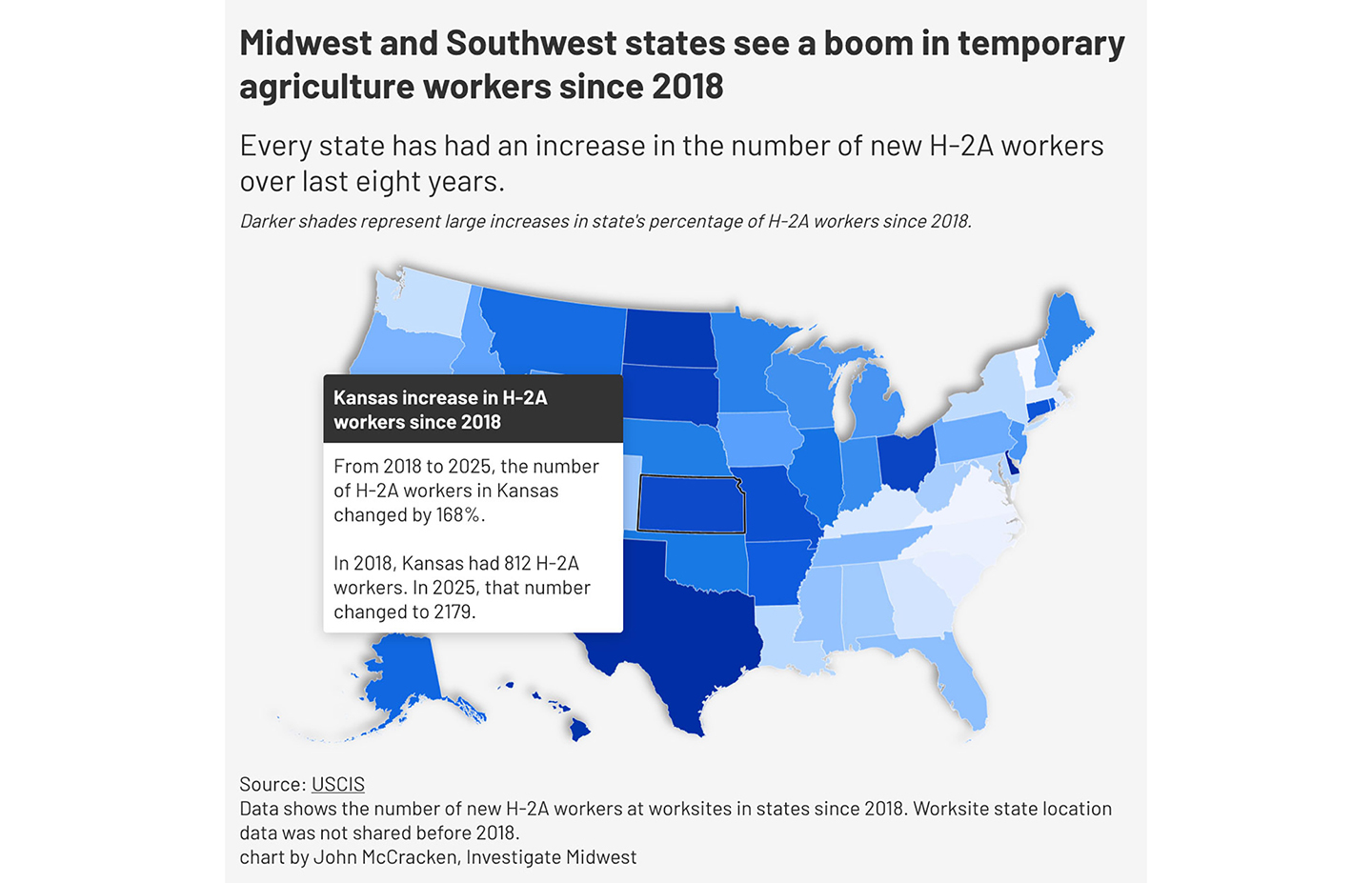
The number of temporary agricultural visa workers in the United States has risen significantly since 2018, according to federal statistics. Every state has reported increases in H-2A visa holders, who are permitted to enter the country to provide seasonal labor for farms and agricultural companies. This surge is particularly notable in Southwestern states, including Texas and New Mexico, where the workforce has expanded dramatically in recent years.
In New Mexico, the number of H-2A visa workers grew from just 308 in 2018 to 2,431 last year. Such increases illustrate the growing reliance on this visa program by agricultural employers across the nation. However, while the overall number of H-2A visas has continued to climb year over year, the rate of new applications slowed between 2024 and 2025, with only a marginal increase of less than one percentage point.
Despite the rising numbers, the H-2A program has faced criticism for issues related to wage theft and poor working conditions. Many workers who arrive under this visa program often remain silent regarding labor abuses, as their legal status is directly linked to their employment. This precarious situation leaves many vulnerable to exploitation and mistreatment.
The Trump administration has historically supported the H-2A visa program and other temporary labor initiatives, aimed at meeting the agricultural sector’s labor demands. In line with this support, the U.S. Department of Labor established an Office of Immigration Policy to assist employers in navigating labor shortages.
The recent slowdown in new visa holders coincides with increased deportation raids across the country, which have disproportionately impacted agricultural and food processing operations. Additionally, the administration has implemented bans on visa programs for numerous countries, further complicating the landscape for potential agricultural workers.
Investigate Midwest, an independent nonprofit newsroom, is dedicated to exposing harmful practices within the agricultural sector through rigorous investigative journalism. Their work sheds light on the dynamics surrounding labor in agriculture, aiming to serve the public interest by highlighting the challenges faced by workers and the consequences of labor policies.
As the agricultural sector continues to seek solutions to labor shortages, the implications of the H-2A visa program remain critical. The balance between meeting workforce needs and ensuring fair treatment for workers is essential for the sustainability of the industry’s future.