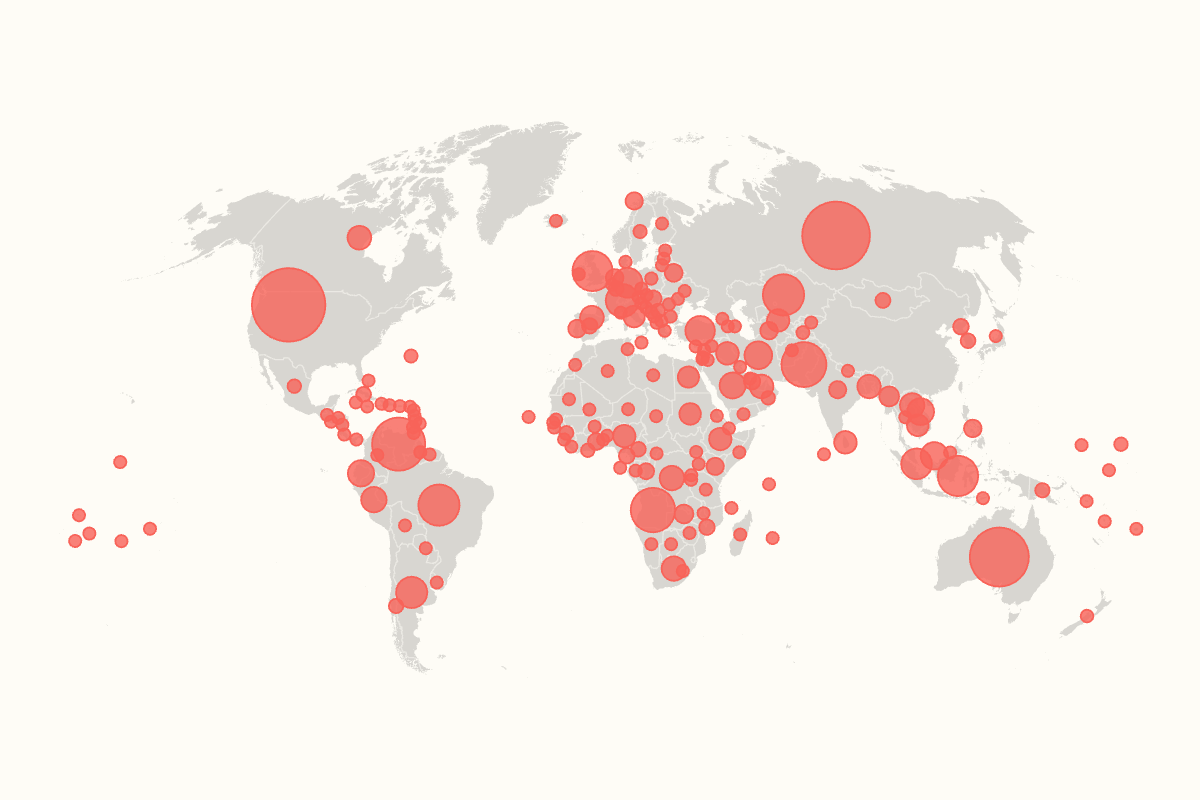
BREAKING: A groundbreaking report from Virginia’s AidData reveals that China’s global loan portfolio has skyrocketed to $2.1 trillion, far exceeding previous estimates. This urgent update underscores China’s dominance as the world’s largest creditor, reshaping international lending dynamics.
The report, based on a meticulous three-year study tracking 30,000 projects across 217 countries, highlights that 76 percent of these loans went to high- and upper-middle-income nations, challenging the long-held belief that China’s lending primarily targets developing countries. Among the top beneficiaries, the United States leads with $202 billion in loans linked to Chinese state entities, covering 2,500 projects nationwide.
Ranking second is Russia, a key ally, with $172 billion, followed closely by Australia at $130 billion. Venezuela and Pakistan round out the top five with $105.7 billion and $75.6 billion, respectively. Notably, the United Kingdom, the sixth-largest economy, ranks tenth.
This development matters NOW as it significantly alters the landscape of global finance and diplomacy. Critics have long accused China of employing “debt-trap diplomacy,” with loans that lead to financial distress for borrowing nations. However, Chinese officials firmly reject this narrative, describing their overseas lending as mutually beneficial and market-driven.
What’s Next? The AidData authors assert that China is rewriting the rules of international aid and credit provision, prompting the U.S., Germany, Japan, and other major lenders to recalibrate their strategies. Brad Parks, executive director of AidData, states, “This extraordinary discovery challenges the narrative that the U.S. has promoted about the risks of accumulating debt exposure to China.”
The implications of these findings are profound, as countries reconsider their financial dependencies. As China expands its lending footprint, global leaders and policymakers must navigate the complex landscape of international relations and economic alliances.
In light of these revelations, the urgency for transparency in international lending practices has never been greater. Stay tuned for further developments on this evolving story that has the potential to reshape the global economic order.