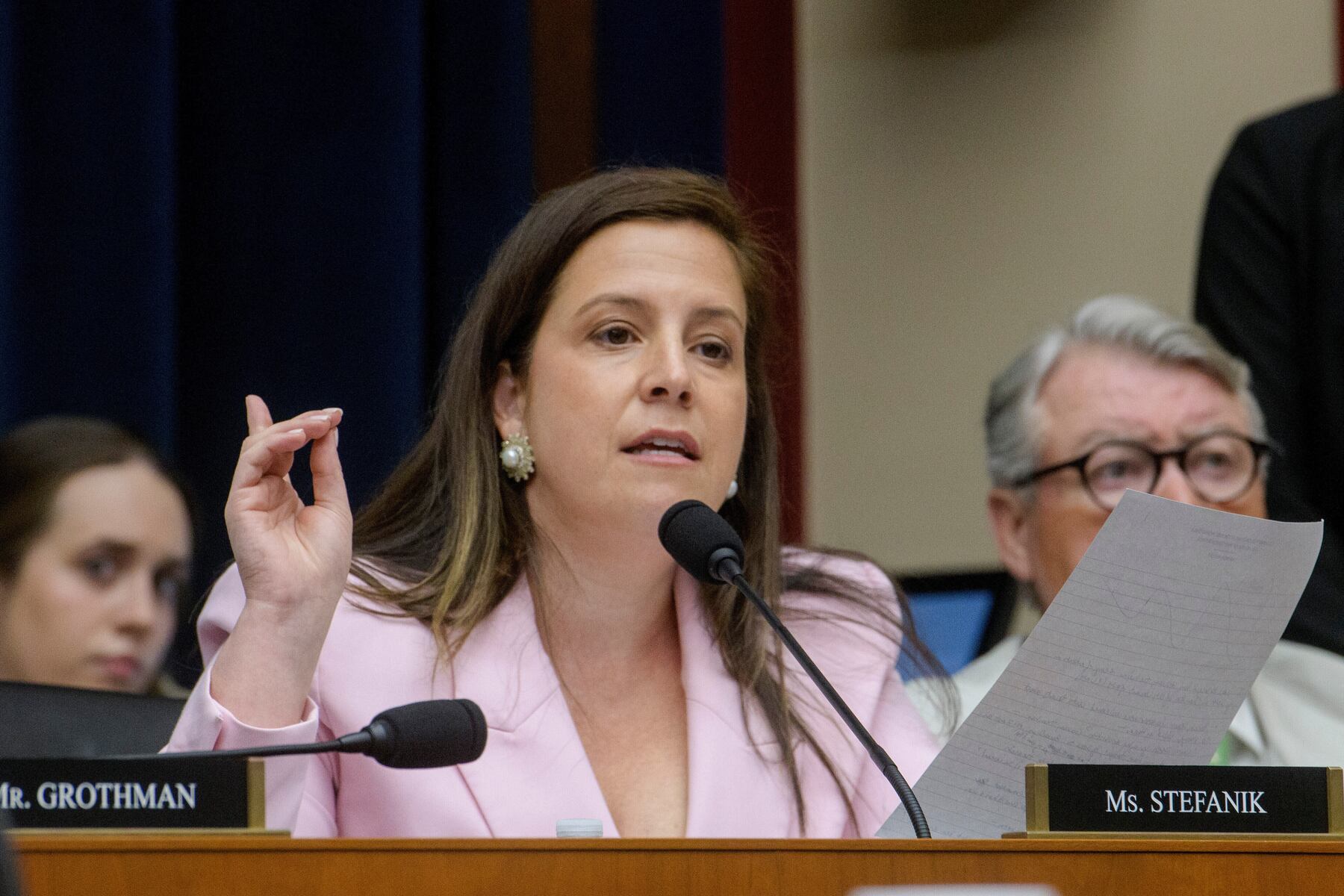
BREAKING: U.S. Rep. Elise Stefanik has made headlines today by announcing her support for in vitro fertilization (IVF), a significant shift from her previous stance. This sudden change is igniting fierce political debate as the race for New York’s 2026 gubernatorial election heats up.
During a press event, Stefanik revealed that she will co-sponsor a new tax credit bill for IVF filers, introduced by Rep. Mike Lawler. This bill aims to alleviate financial burdens on families seeking to conceive through IVF. However, just hours later, Governor Kathy Hochul’s campaign quickly jumped on Stefanik’s past remarks, highlighting a radio interview from October 2024 where she expressed opposition to IVF and contraception.
In that interview, Stefanik stated, “I oppose access to IVF (and) access to birth control,” raising eyebrows among constituents concerned about reproductive rights. The Hochul campaign promptly released audio from the interview, asserting that “Just like Trump, Stefanik is lying through her teeth about her record,” according to campaign spokeswoman Sarafina Chitika.
Stefanik’s campaign responded to the backlash, admitting she “misspoke” during the radio interview. In a March 2024 article, Stefanik previously stated, “I’ve always spoken to this issue with compassion, and I strongly support IVF.” The apparent inconsistency is creating waves as reproductive rights become a central theme in the upcoming election.
The IVF Access and Affordability Act, initiated by Lawler, has yet to advance in Congress. Stefanik’s recent co-sponsorship, filed just Monday, signals a potential pivot in her political strategy, especially as she prepares for a possible primary challenge from Nassau County Executive Bruce Blakeman, who supports abortion rights.
As the political landscape shifts, polls reveal that support for abortion rights remains high in New York. A recent survey from the Siena Research Institute indicates that 65% of voters favor enshrining abortion rights in the state constitution. This political climate may be pivotal for Stefanik, who currently leads Blakeman in hypothetical primary matchups, as indicated by a recent poll showing her with 74% of the vote compared to Blakeman’s 5%.
As reproductive rights take center stage, the implications of Stefanik’s shift could resonate beyond the campaign trail. “As the mom of a young son, I hope to make the joy of raising a family more accessible for hardworking New Yorkers struggling with infertility,” Stefanik stated, emphasizing the human impact of these legislative changes.
The urgency surrounding these developments underlines the significance of reproductive rights in shaping the upcoming gubernatorial race. With both candidates vying for voter support, the conversation about IVF and contraception access is sure to intensify in the coming weeks.
Stay tuned for more updates as this story unfolds and the political landscape continues to evolve.