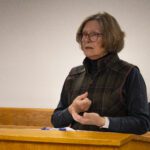
UPDATE: The Ionia County Board of Commissioners has just approved significant revisions to road budget policies that will impact local infrastructure funding. In a crucial meeting held on October 24, 2023, Managing Director Linda Pigue presented the updates aimed at simplifying the budgeting process for the construction of primary and local roads and bridges.
This decision comes as the county grapples with escalating costs for road repairs and construction, an issue that has reached critical levels. Pigue emphasized the need for these changes, stating that the current policies placed an unsustainable burden on local townships. The revisions will allow the Road Department to fully fund upgrades to all primary roads and bridges, a substantial shift from the previous policy where local townships were responsible for significant portions of the costs.
The board voted 5-2 in favor of these revisions, with Jack Shattuck and Larry Tiejema opposing. Shattuck expressed concerns that the new policies could disproportionately impact financially struggling townships, highlighting the variability in resources across the region.
Under the new framework, any bridge preservation, rehabilitation, or replacement projects on the primary road system will be fully funded by the Road Department, while local townships will now bear all costs related to local road projects. This includes engineering, permitting, and construction expenses, which can rapidly accumulate. Pigue pointed out that replacing all 33 primary road bridges would cost approximately $3,722,920, while the local road bridges would amount to about $14,731,250.
In a bid to ease the transition, the commissioners also approved a resolution to “grandfather in” any local bridge funding applications submitted before January 1, 2026. This decision allows townships to secure funding without immediate financial pressure.
Pigue highlighted the importance of federal grants, which require local contributions. She referenced a specific case where a bridge replacement project costing $1,452,000 would necessitate a local match of $72,600, a share that was previously split with local townships. With the new policy, the townships would no longer be expected to contribute, easing financial strain.
The urgency of these changes is underscored by the reality that many townships are already struggling to meet basic operational costs, such as funding fire departments and other essential services.
Commissioner Larry Tiejema also proposed increasing the county’s road millage to help fund these necessary improvements, but this suggestion did not receive immediate support from fellow commissioners.
As the county navigates these policy changes, the implications for local governance and infrastructure funding are profound. The revisions aim to provide a more sustainable funding model for road and bridge maintenance, addressing urgent repair needs without overburdening local townships.
The Ionia County Board of Commissioners will continue to monitor the impacts of these policy changes in upcoming meetings, as the community anticipates how these new policies will unfold in practice.
Stay tuned for more updates on this developing story as Ionia County works to enhance its road infrastructure.