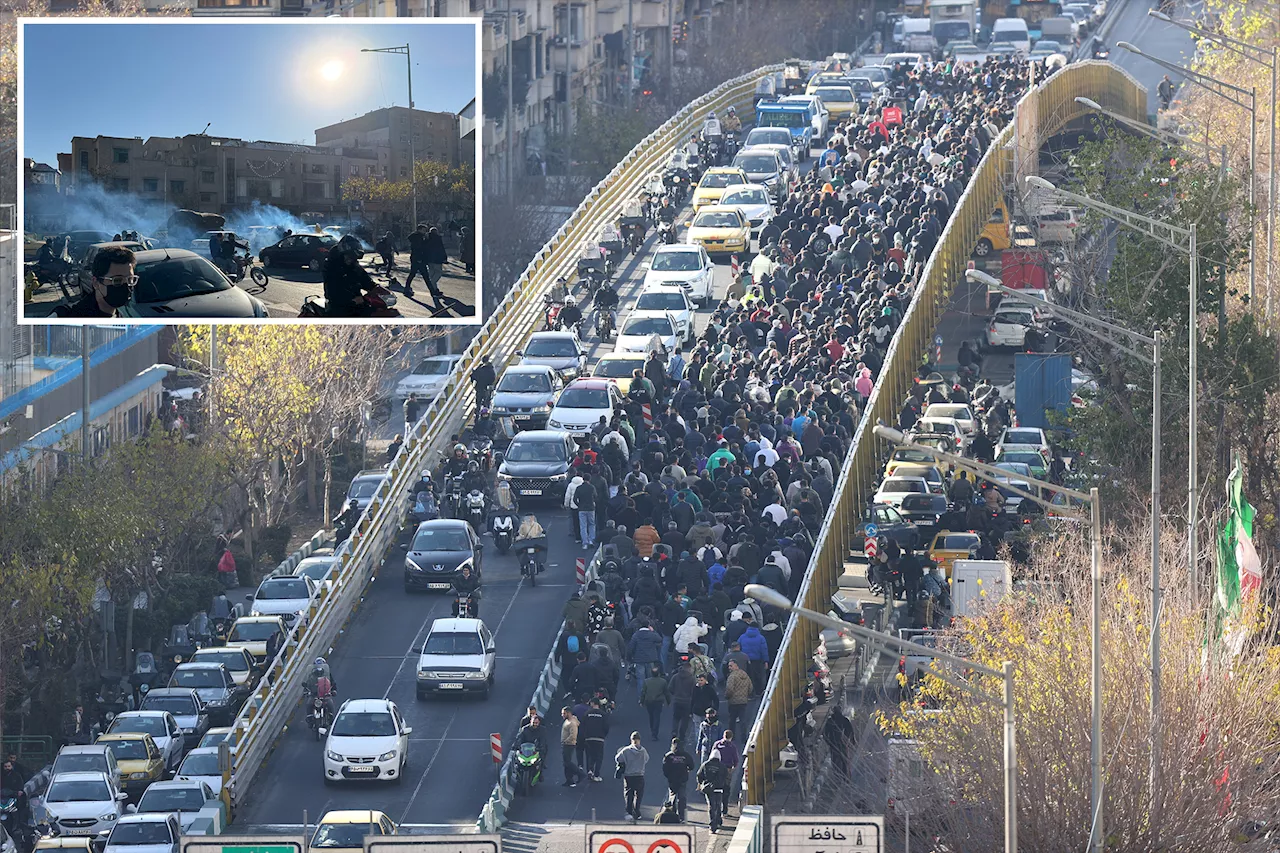
UPDATE: Protests have erupted across Iran, fueled by skyrocketing living costs and the dramatic plunge of the Iranian rial, which is now valued at an alarming 1.4 million rials to $1. This economic turmoil has triggered widespread unrest as demonstrators voice their outrage against the government’s mismanagement.
Residents in cities like Tehran and Karaj have taken to the streets, demanding change as inflation surges to 48.6%. The protests began gaining momentum on Thursday, shutting down businesses, universities, and government offices. Many participants are chanting, “Death to the dictator,” a stark reversal of the regime’s own slogans.
The Iranian economy is in crisis, with a shrinking GDP and international sanctions exacerbating the situation. The cost of essentials has skyrocketed, with Tarom Hashemi rice reported to cost an average of 4 million rials per kilogram, equivalent to around $3.56 per pound. As one shopper in Karaj lamented, “Ali Khamenei has spent over four decades chasing war, missiles, and chanting, ‘Death to this or that.’ Now we can’t even afford rice.”
The protests have already led to violent confrontations, with reports of at least three deaths, including a 21-year-old volunteer officer from the Revolutionary Guard, killed during protests in Lorestan province. Officials have attributed the unrest to economic pressures, urging citizens to remain united against perceived foreign interference.
As authorities try to quell the protests, the Abdorrahman Boroumand Center for Human Rights in Iran has confirmed the deaths of two additional protesters in Lordegan. The situation remains volatile, with the potential for further escalation as demonstrators continue to challenge the regime’s authority.
Economists and analysts have long warned of the impending cost of living crisis, which has now reached a boiling point. With the rial’s value collapsing, many Iranians are struggling to afford basic necessities, leading to widespread anger and frustration.
The international community is closely monitoring the situation, as the Iranian government faces mounting pressure both from within and outside its borders. As the protests spread, the world watches to see how the regime will respond to the growing dissent.
WHAT’S NEXT: Citizens are expected to continue demonstrations, particularly in key economic hubs like Tehran’s bazaars. Observers are urging a peaceful dialogue to address the economic crisis, but with tensions running high, the potential for further violence looms large.