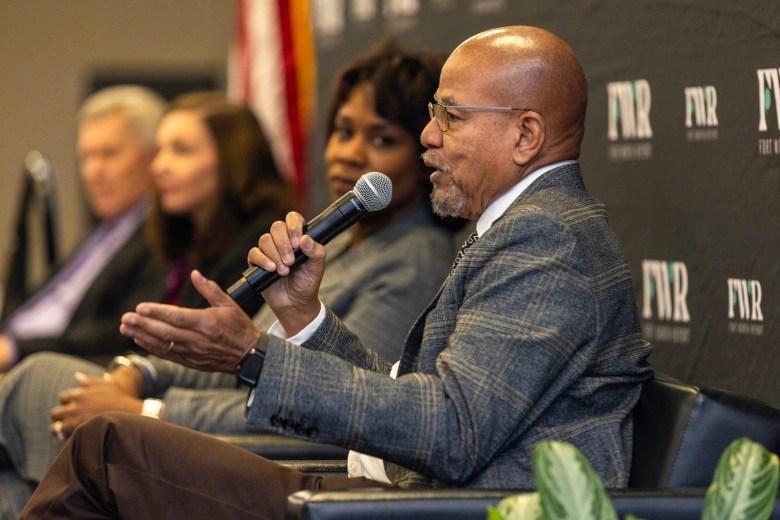
UPDATE: Fort Worth leaders are calling for an urgent unified plan to establish the city as a premier medical innovation hub. During a critical public policy panel at Tarrant County College on December 2, 2025, experts emphasized that collaboration among local universities, hospitals, and businesses is essential for success.
Dr. Stuart D. Flynn, founding dean of the Anne Burnett Marion School of Medicine at TCU, stressed the importance of viewing local institutions as partners rather than competitors. “We have something unique in this city, and it’s very fragile…we actually all work together,” Flynn stated. This sentiment reflects a growing consensus among medical leaders that collaboration can propel Fort Worth to the forefront of medical research and innovation.
The panel highlighted that UNT Health Fort Worth currently conducts approximately $110 million in medical research annually, with aspirations to double that figure to $200 million. Dr. Kirk Calhoun, president of UNT Health Fort Worth, pointed out the potential of a collaborative hub to address critical healthcare questions, such as improving quality and controlling costs.
However, the clock is ticking. Flynn cautioned that without immediate action, Fort Worth risks becoming fragmented in its medical efforts. “The longer we wait, the more apt this city is to splinter,” he warned, referencing previous experiences where lack of unity hindered progress in other cities.
Panelists, including Elyse Stolz Dickerson, CEO of Eosera, highlighted the need for a strategic roadmap to unite local stakeholders. “If we don’t incubate enough companies here, we won’t have any success,” Dickerson said, emphasizing the importance of fostering a supportive environment for health startups.
Dr. Tricia C. Elliott from JPS Health Network echoed these sentiments, advocating for practical applications of medical research that can directly benefit patients. “Having collaboration to translate that research into practice is the ultimate goal,” Elliott stated, highlighting the potential for significant impact on community health.
The urgency is palpable as Fort Worth stands at a crossroads. Leaders recognize that the city has the opportunity to establish itself as a major player in medical innovation. “It’s going to take 20 or 30 years to see some major fruits of this. If we don’t start today, it’s never going to happen,” Flynn cautioned.
As discussions continue, the focus remains on creating a cohesive strategy that fosters innovation while ensuring that Fort Worth can attract and retain top talent in the field. The community’s involvement will be crucial in shaping this vision into reality.
Stay tuned for more updates as Fort Worth leaders work towards a collaborative future in medical innovation.