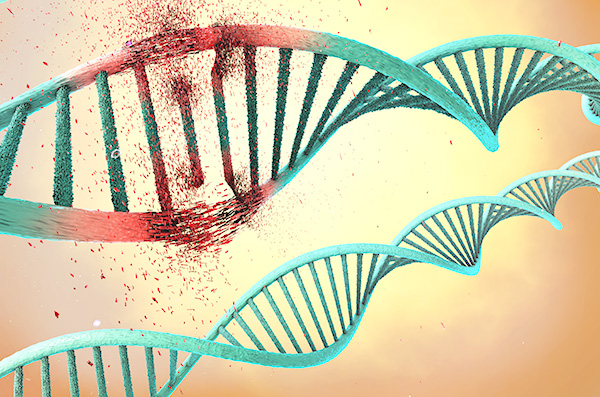
BREAKING: A revolutionary new fluorescent sensor developed at Utrecht University is transforming how scientists observe DNA repair processes, capturing real-time data on cellular responses to DNA damage. Published today in Nature Communications, this groundbreaking tool could significantly impact cancer research, drug safety testing, and aging studies.
This innovative sensor allows researchers to monitor the intricate dynamics of DNA repair as it happens, rather than relying on outdated methods that provided only static snapshots. Traditional techniques used antibodies that interfered with cellular functions, but the new sensor, engineered from the protein MCPH1, interacts with damaged DNA without hindering the cell’s natural repair mechanisms.
Lead researcher Tuncay Baubec, PhD, stated, “Our sensor is different. It’s built from parts taken from a natural protein that the cell already uses.” This unique design enables the sensor to bind and unbind to DNA damage sites autonomously, offering researchers a genuine view of cellular behavior.
Real-time imaging with this sensor revealed that damage foci can form within minutes of exposure to genotoxic agents, such as etoposide and ultraviolet light, and how these foci resolve over hours. This immediate observation allows scientists to track the speed at which repair proteins arrive and how effectively the cell resolves damage.
Richard Cardoso Da Silva, PhD, who was integral to testing the sensor, recounted a pivotal moment: “I was testing some drugs and saw the sensor lighting up exactly where commercial antibodies did. That was the moment I thought: this is going to work.” The ability to visualize the repair process in real time presents a thrilling advancement in biological research.
Additionally, the sensor has shown versatility beyond lab cultures. In the nematode C. elegans, it successfully identified programmed DNA breaks occurring naturally, indicating its potential applicability across various living organisms, not just isolated cells.
While the sensor itself is not a therapeutic intervention, its implications for translational research are significant. Many cancer therapies rely on inducing DNA damage in tumor cells. With this tool, researchers can gain deeper insights into repair capacities, making it easier to devise effective treatments and understand the aging process.
This cutting-edge development opens a new window into one of biology’s most fundamental processes, enabling scientists to watch DNA repair in real time. The Utrecht team is committed to making this probe widely available, aiming to accelerate discoveries across multiple fields.
As the scientific community eagerly anticipates further developments, the introduction of this sensor marks a pivotal moment in understanding cellular responses to DNA damage. Stay tuned for updates on its applications and potential breakthroughs in health science.