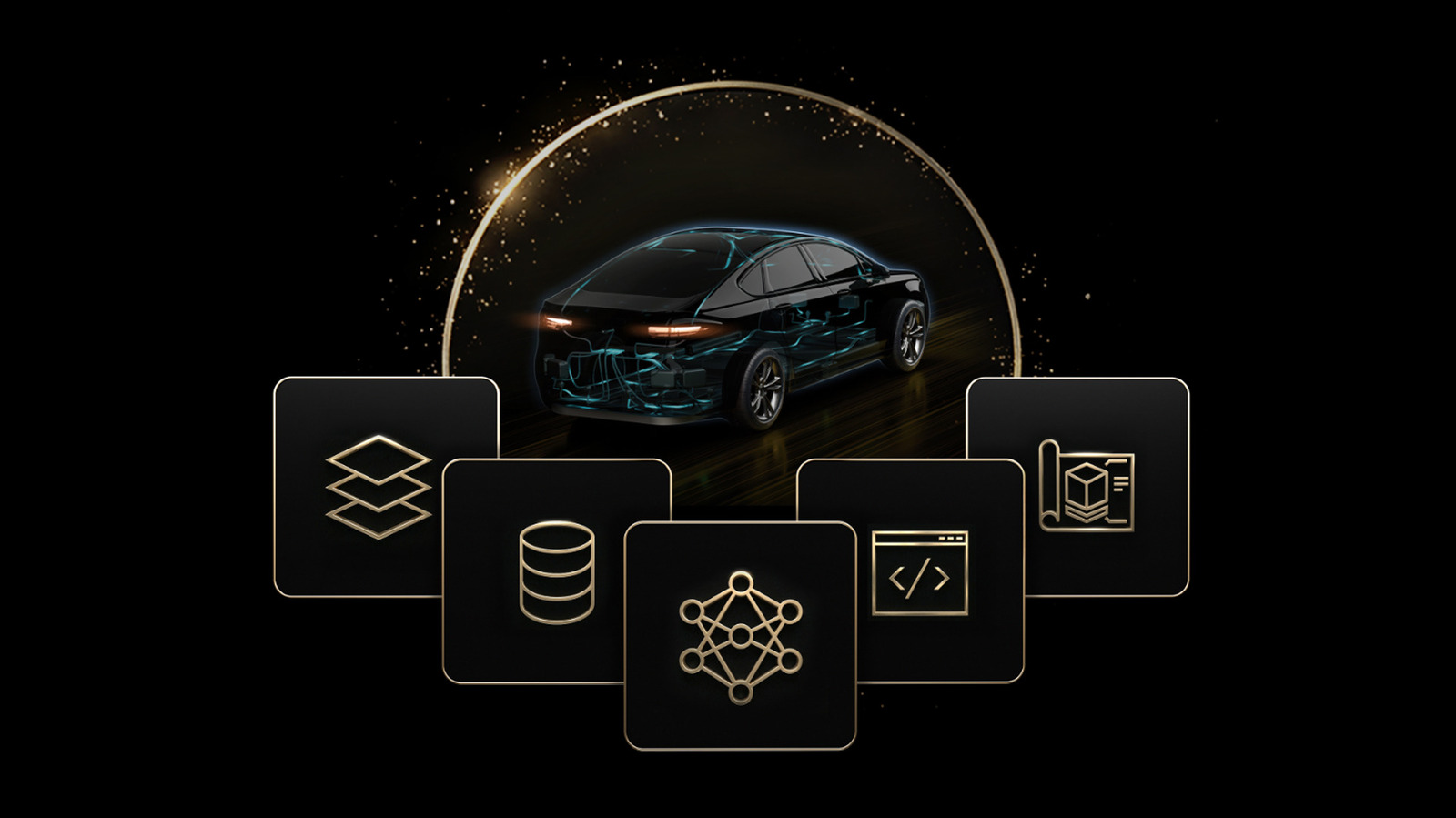
BREAKING: Nvidia has just announced revolutionary new AI technology for self-driving vehicles, claiming to bring “humanlike thinking” to the forefront of autonomous driving. This urgent development was revealed at CES 2026, where Nvidia’s Chief, Jensen Huang, emphasized the potential impact on robotaxis and autonomous vehicles.
The tech, named Alpamayo, is designed to enable cars to navigate complex, unforeseen scenarios by employing vision language action (VLA) AI models that focus on multi-step reasoning. This breakthrough aims to address a critical gap in current self-driving systems, which often struggle when faced with novel situations.
2026 marks a pivotal year for self-driving technology, as Elon Musk previously indicated that Tesla’s forthcoming full self-driving (FSD) V14.3 update would elevate the driving experience to a level resembling consciousness. However, Nvidia’s Alpamayo seeks to surpass these ambitions by integrating perception and planning, allowing vehicles to reason through unexpected navigation challenges.
Nvidia’s innovation is poised to transform the landscape of autonomous driving. The core components of Alpamayo include Alpamayo 1, the first VLA model focused on reasoning, AlpaSim, an open-source simulation framework, and a dataset featuring over 1,700 hours of real-world autonomous driving data. This comprehensive stack is not just a competitor to Tesla but serves as an open ecosystem that car manufacturers and researchers can adapt for their specific needs.
“The ChatGPT moment for physical AI is here — when machines begin to understand, reason, and act in the real world,”
Huang declared, emphasizing the urgency and significance of this technology. The first vehicle to implement Alpamayo will be the 2026 Mercedes-Benz CLA, set to hit U.S. roads, offering an enhanced level 2 (L2) autonomous driving experience. Other major players like Lucid, JLR, and Uber are also exploring the capabilities of Alpamayo for their own self-driving advancements.
This announcement highlights a major shift in the race for self-driving technology, as the industry grapples with the need for vehicles to effectively reason in dynamic environments. As Nvidia’s Alpamayo prepares to lead the charge, the implications for safety and efficiency in autonomous transportation could be profound.
As the technology develops, all eyes will be on how Alpamayo performs in real-world conditions. The industry anticipates that this could set a new standard for autonomous driving, making the roads safer and more efficient for everyone.
Stay tuned for more updates on this groundbreaking technology as it unfolds, and consider the transformative impact it may have on our daily commutes and travel experiences.