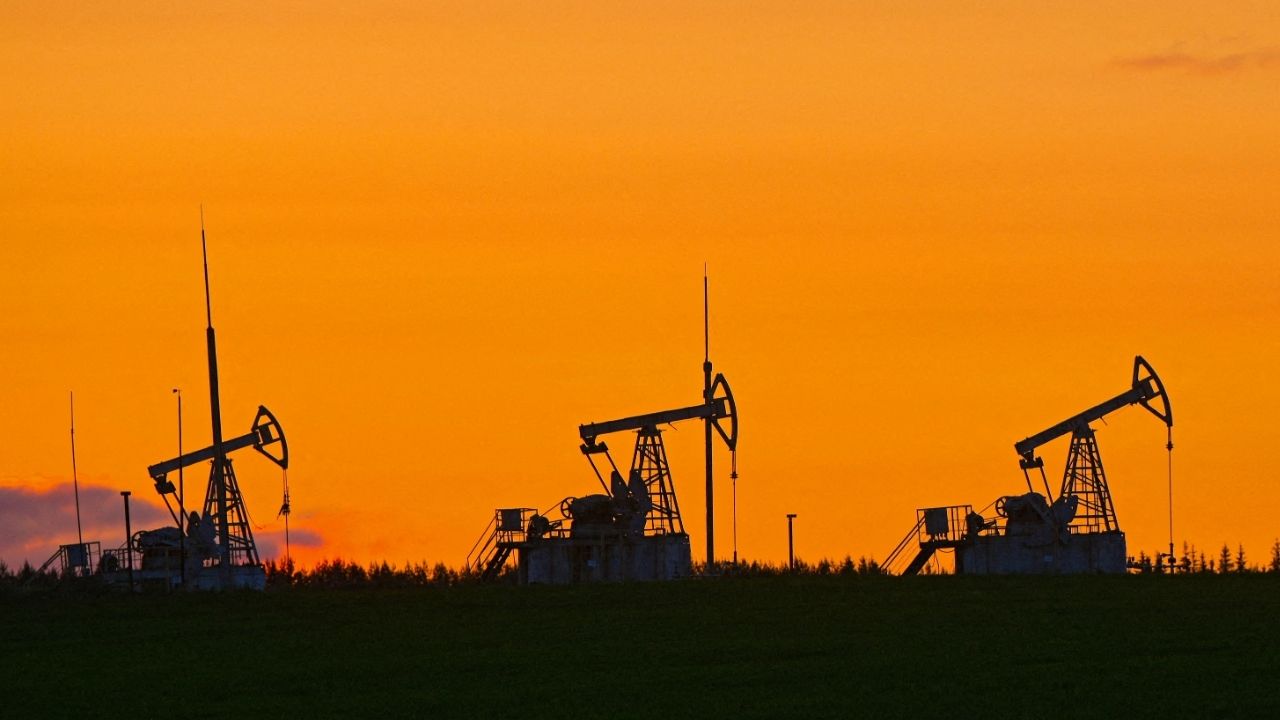
UPDATE: Oil prices have surged by $1 a barrel as of 9:14 a.m. CDT (1514 GMT) today, driven by escalating tensions from Ukrainian drone attacks and a pivotal decision by OPEC to maintain current output levels. Brent crude futures climbed to $63.38 a barrel, while U.S. West Texas Intermediate (WTI) crude rose to $59.49 a barrel, marking an increase of 1.6% and 1.61%, respectively.
The rise in oil prices comes amid reports of Ukrainian military operations targeting Russian maritime assets in the Black Sea. Phil Flynn, a senior analyst at the Price Futures Group, stated, “Ukrainian drone attacks on the Russian shadow fleet, along with OPEC’s commitment to hold production steady, have created an optimistic market atmosphere. Global oil demand is still on the rise, even with ongoing negative narratives surrounding it.”
The situation intensified over the weekend when the Caspian Pipeline Consortium (CPC), which transports 1% of the world’s oil, reported damage to one of its mooring points at the Novorossiysk terminal, temporarily halting operations. However, Chevron, a key CPC shareholder, confirmed that loadings at Novorossiysk would continue, providing some relief to the market.
Analysts have noted that the attacks on the CPC terminal are influencing prices. UBS analyst Giovanni Staunovo emphasized that these developments are propelling oil prices upward as Ukraine continues its assault, recently targeting two oil tankers en route to Novorossiysk.
Amid these tensions, OPEC and its allies decided to keep output levels unchanged, a move interpreted positively by the market. LSEG senior analyst Anh Pham remarked, “OPEC+’s decision to maintain its production target alleviated concerns about an oil glut and helped stabilize supply expectations for the coming months.”
Despite this rise, oil prices have faced significant pressure in recent months. Both Brent and WTI crude futures closed lower on Friday, marking a fourth consecutive month of declines—the longest losing streak since 2023—due to fears of increasing global supply.
In a related development, U.S. President Donald Trump announced that “the airspace above and surrounding Venezuela” should be considered closed, further adding to the uncertainty in the oil market. Venezuela, a major oil producer, has become a focal point as tensions rise. Trump also mentioned having discussions with Venezuelan President Nicolas Maduro, though details remain unclear.
As the situation evolves, market watchers will be keen to see how these geopolitical developments affect oil supply and demand in the immediate future. The latest surge in oil prices underscores the complex interplay between military actions and global energy markets, highlighting the urgent need for ongoing monitoring.
Stay tuned for further updates as this story develops.