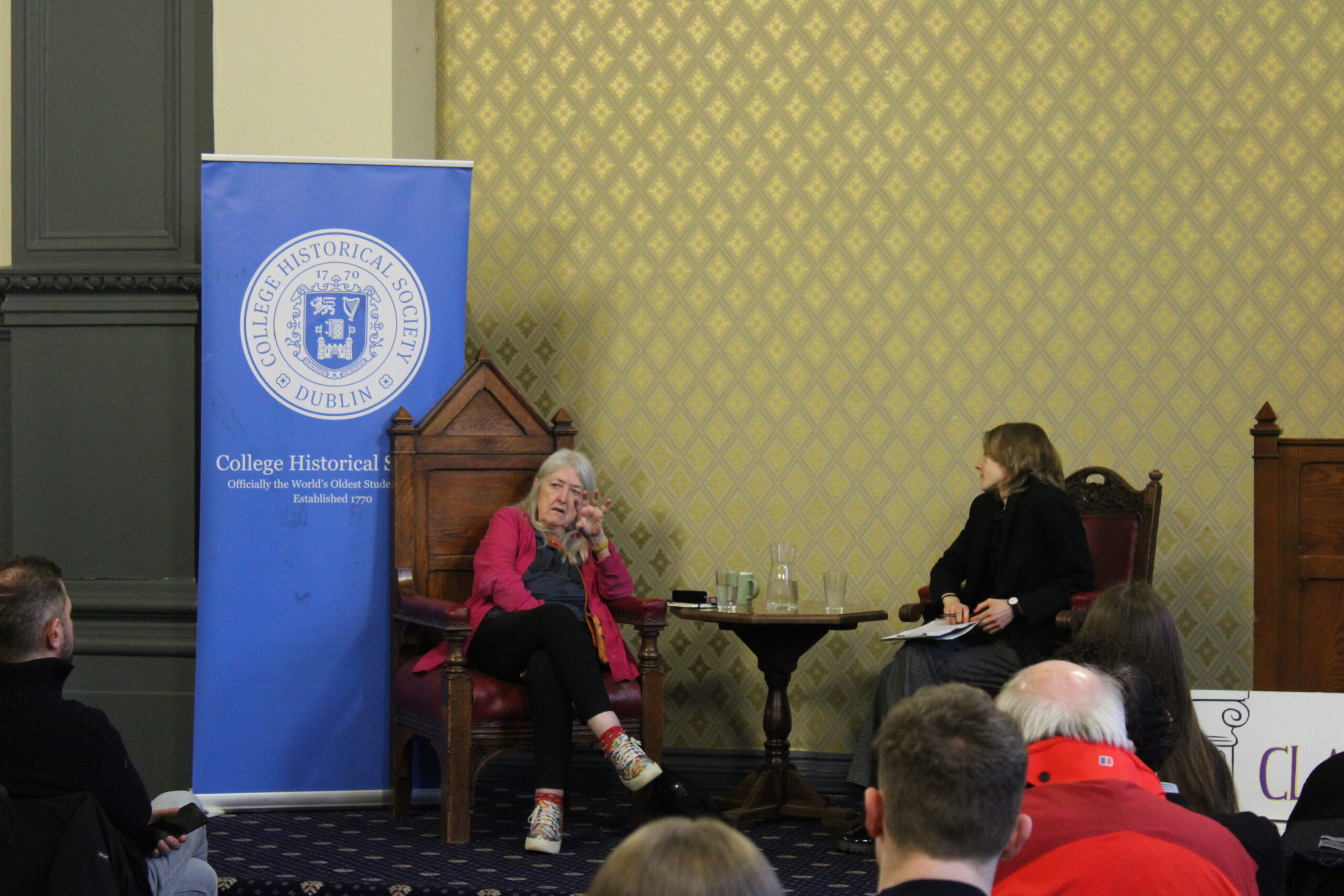
BREAKING: Professor Mary Beard, the acclaimed classicist and documentary presenter, received the prestigious Gold Medal for Outstanding Contributions to Public Discourse from the College Historical Society at Trinity College Dublin on February 6, 2023. This recognition highlights her impactful role in academia and public life.
In a powerful address, Beard shared a poignant childhood memory from the 1960s, recalling her visit to the British Museum. At just five years old, she was captivated by a 4,000-year-old piece of bread displayed among Egyptian mummies. This moment shaped her belief in the necessity of sharing knowledge and opening “museum cases for other people.” Beard emphasized, “the study of history helps us think about ourselves differently,” advocating for the importance of humanities degrees in fostering responsible citizenship.
Beard’s remarks come at a critical time, as the Conservative Party has proposed cuts to funding for humanities degrees, dismissing them as a luxury. “Politicians think the humanities are a luxury,” she argued, “but the humanities are absolutely essential.” Her concerns resonate amid ongoing debates about the value of education in a rapidly changing world.
In her discussion, Beard also addressed the role of conservation and curation in museums, advocating for a hands-on approach. “It’s a risk I’m prepared to take,” she declared, underscoring the importance of engaging with artifacts. As a Trustee of the British Museum, she believes that the experience of touching ancient objects can significantly impact young minds.
The conversation shifted to the adaptation of ancient classics into films, with Beard noting that cinema plays a vital role in keeping historical narratives alive, even if they deviate from strict accuracy. She acknowledged the upcoming adaptation of the Odyssey by Christopher Nolan, stating that such films could spark greater interest in classical literature worldwide.
Beard, who describes herself as a “post-truth historian,” highlighted the value of exploring narratives beyond objective truths. “When the untruths are cut out, we are left with boring information,” she remarked, emphasizing how these distortions illustrate societal values and priorities.
In a candid moment, Beard expressed her relief at having retired before the rise of artificial intelligence in academia, but she also shared her recent experiment using AI to write about Nero’s death in her style. This exercise revealed her unique voice, which she struggled to find early in her career. “I tried to sound too much like my academic peers,” she reflected, underscoring the importance of individuality in scholarly work.
Beard’s insights into the parallels between ancient and modern political dynamics have sparked curiosity. When asked which Roman Emperor resembles Donald Trump, she pointed to Elagabalus, highlighting the complexities of historical comparisons. She believes that examining trends of imperial power can illuminate contemporary governance issues.
As Beard concludes her address, she encourages all to embrace curiosity and self-reflection, urging academics to “speak the truth more often.” Her call to action resonates deeply in today’s contentious climate, reminding us of the enduring relevance of history and humanities in understanding our world.
This urgent recognition of Professor Mary Beard’s contributions underscores the vital role of education in shaping informed citizens. Her messages about the importance of humanities and historical engagement are critical in fostering a more thoughtful and responsible society.