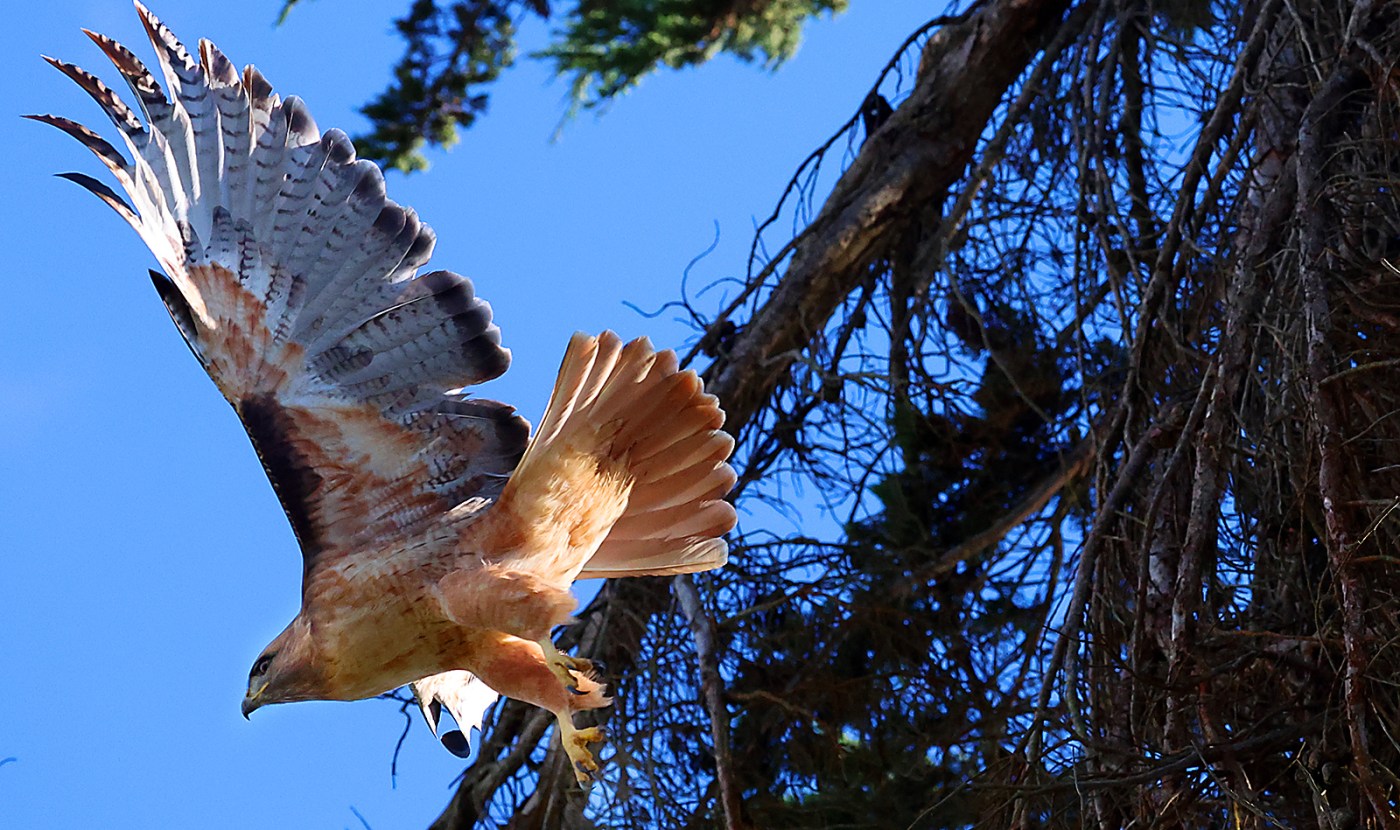
UPDATE: A stunning spectacle unfolded today as a red-tailed hawk was observed hunting for food at Lighthouse Field State Beach in Santa Cruz. Witnesses captured breathtaking images of the bird, which boasts a wingspan of nearly 5 feet, lifting off from a branch in search of its next meal.
At approximately 12:30 PM, the hawk swooped down and caught a rodent, showcasing its impressive hunting skills. Eyewitnesses described the moment as both exhilarating and awe-inspiring, highlighting the hawk’s prowess in a natural setting. These birds, known for their distinctive red tails and sharp eyesight, are prevalent across North America, migrating from the Arctic Circle to parts of Central America during different seasons.
According to the Cornell Lab of Ornithology, the red-tailed hawk is considered the most common hawk in North America. “If you’ve got sharp eyes, you’ll see several individuals on almost any long car ride,” the lab notes. They are often spotted soaring above open fields or perched on telephone poles, on the lookout for prey.
Locally, red-tailed hawks become more numerous during winter months, as birds from northern regions join the year-round residents. Their adaptability and hunting techniques are fascinating; they have been observed hunting in pairs, coordinating to catch tree squirrels.
In an interesting fact shared by the Cornell Lab, the oldest known wild red-tailed hawk was discovered in Michigan in 2011, having lived for at least 30 years and 8 months. This remarkable lifespan underscores the species’ resilience and adaptability in varying environments.
As nature enthusiasts flock to Lighthouse Field State Beach, attention is drawn not only to the beauty of these majestic birds but also to the critical role they play in our ecosystem. The latest observations are a reminder of the wildlife that thrives in our backyards and the importance of preserving such habitats.
Stay tuned for more updates on wildlife sightings and conservation efforts at Lighthouse Field. This ongoing interaction between nature and community encourages everyone to appreciate and protect our local ecosystems.