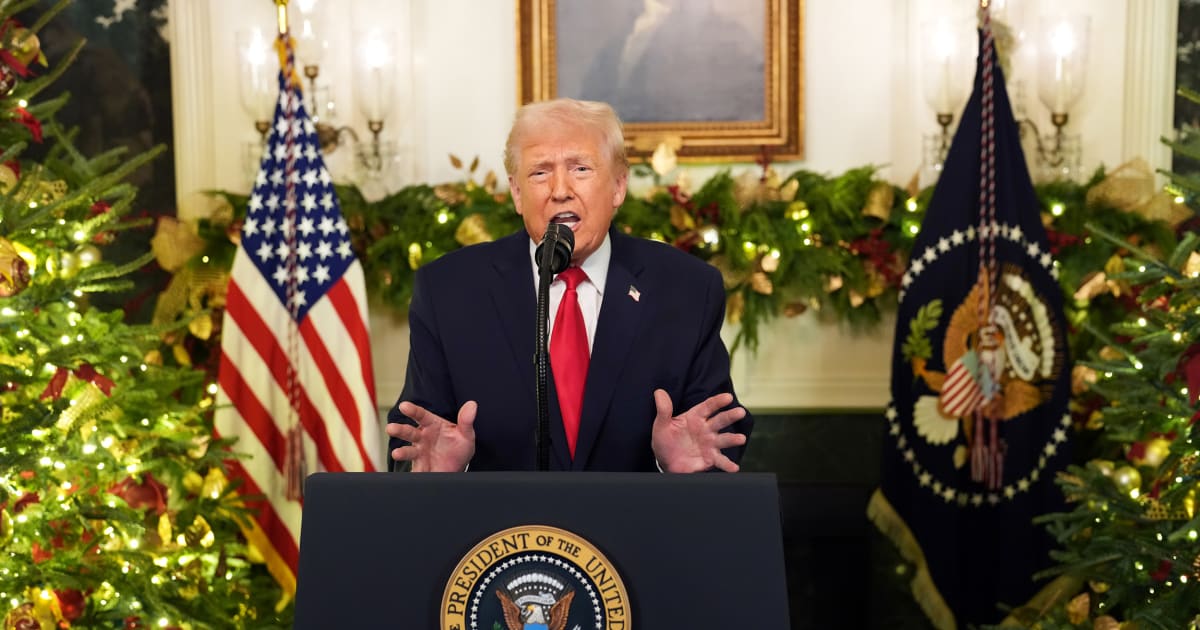
UPDATE: In an urgent address from the White House last night, President Donald Trump asserted that the U.S. economy is rebounding, despite widespread disapproval among Americans. With a focus on military bonuses and vague proposals for housing and healthcare, Trump aimed to highlight his administration’s achievements while placing blame on Democrats for ongoing economic issues, particularly the escalating cost-of-living crisis.
Trump’s roughly 20-minute speech, delivered on October 18, 2025, painted a picture of triumph amid adversity, stating, “Eleven months ago I inherited a mess and I’m fixing it.” However, new polling from PBS News indicates that only 36% of Americans approve of his handling of the economy, with more than 60% feeling it is not working for them.
Despite these sentiments, Trump portrayed his administration’s efforts as historic successes. He claimed significant reductions in the prices of essential goods, asserting that gasoline is now “under $2.50 a gallon” in much of the country, while AAA reports the national average is actually $2.91 per gallon. He further stated, “Inflation has stopped,” yet the most recent data shows inflation remains at 3%, unchanged since he took office.
The president encouraged patience among Americans, promising financial relief in the new year through tariffs and what he dubbed the “Big Beautiful Bill,” which he claims will deliver “the largest tax cuts in American history.” However, experts caution that these tax refunds may not benefit all families equally, particularly as the bill cuts funding for crucial programs like Medicaid and SNAP, affecting low-income households.
Among the few concrete announcements, Trump revealed a “warrior dividend” of $1,776 for more than 1.45 million service members, stating, “The checks are already on the way.” This initiative aims to honor the nation’s founding but could be overshadowed by rising health insurance premiums, which are expected to double for Affordable Care Act enrollees due to congressional inaction on subsidies.
On housing policy, Trump echoed claims made by Vice President JD Vance, attributing rising costs to undocumented immigrants, a notion rejected by housing experts who cite supply shortages and high mortgage rates as primary drivers. Economists warn that proposed mass deportations could worsen the housing crisis by stalling new construction, as immigrants play a vital role in the labor force.
As Trump continues to frame his administration’s narrative, the economic landscape remains complex and challenging for many Americans. The president’s refusal to acknowledge the public’s concerns could have significant implications as the 2026 campaign approaches.
Stay tuned for more updates on this developing story as both parties gear up for the upcoming elections and the economic landscape continues to evolve.