BREAKING: President Donald Trump has just unveiled a groundbreaking security strategy, urging Europe to become self-sufficient in its defense capabilities by the end of 2027. This announcement marks a significant shift in U.S. foreign policy, as the document declares that “the days of the United States propping up the entire world order like Atlas are over.”
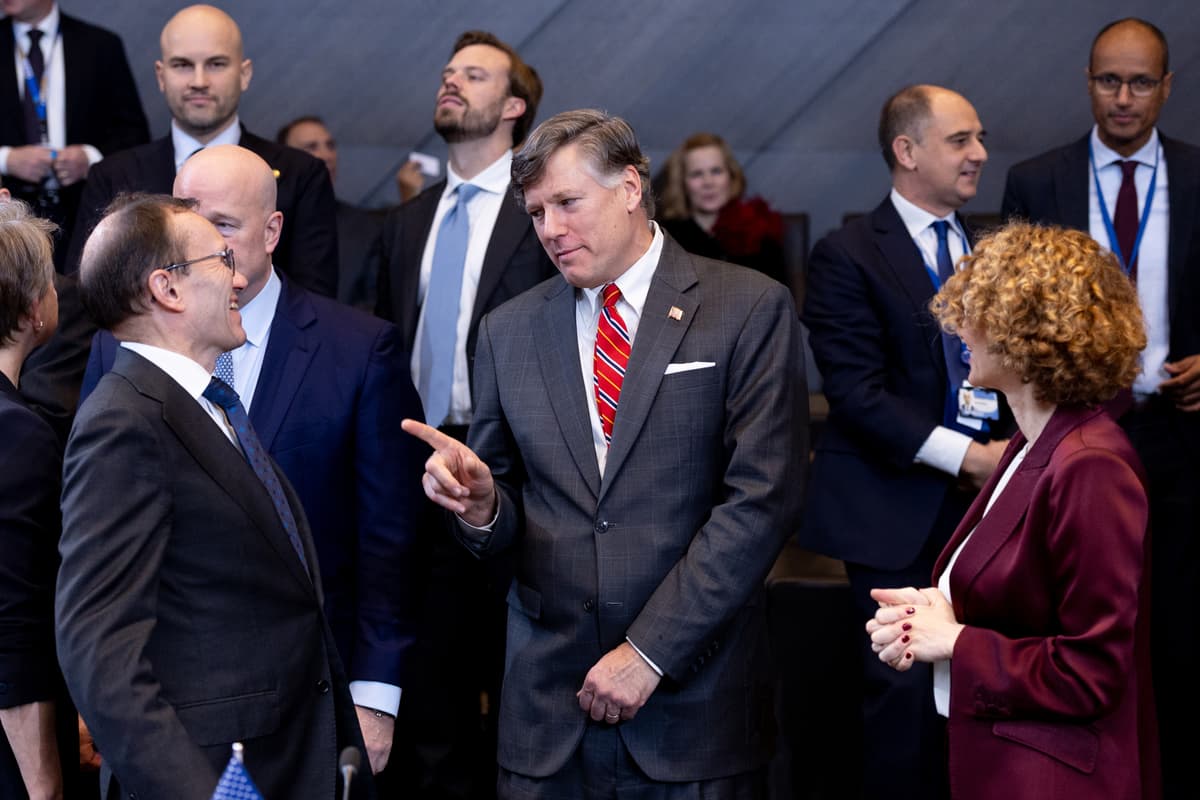
The urgency behind this strategy is clear: with the NATO alliance approaching its 80th anniversary in 2029, the Trump Administration is pushing for a radical transformation of trans-Atlantic relationships. In a direct challenge to European leaders, the document states that Europe must take primary responsibility for its own security, a sentiment echoed by Deputy Secretary of State Christopher Landau, who emphasized that “successive U.S. Administrations have been saying this” but “our Administration means what it says.”
The 33-page strategy report, released during the annual NATO foreign ministers’ meeting in Brussels, outlines the expectation that Europe will assume the majority of NATO’s conventional defense capabilities—ranging from intelligence to missile systems—by 2027. This comes in the wake of the European Union’s earlier commitment to achieving similar goals by 2030, a target many analysts deemed too ambitious given current shortfalls in areas such as air defense and cyber warfare.
As tensions with Russia remain high, the report also calls for an end to NATO expansion and criticizes European governments for failing to align public sentiment with effective policy regarding the ongoing conflict in Ukraine. It highlights a disconnect between a large European majority seeking peace and the actions of their leaders, which the report claims are undermined by “censorship of public opinion.”
The implications of this strategy are profound. Analysts warn that Trump’s push for European self-reliance could lead to a fundamental reshaping of the U.S.-Europe alliance, raising fears about the future of collective security in the region. The report also sparked immediate backlash, with critics like Representative Jason Crow labeling it a “catastrophic” retreat from alliances and partnerships that could jeopardize America’s global standing.
Meanwhile, on the ground, European leaders are reacting cautiously. German Foreign Minister Johann Wadephul reaffirmed that the United States remains “our most important ally,” pushing back against Trump’s criticisms. In contrast, members of the far-right such as Markus Frohnmaier from the Alternative for Germany party praised the strategy as a necessary reality check.
The report further raises alarms about demographic shifts in Europe, warning of a “stark prospect of civilizational erasure” due to declining birth rates and immigration policies. It argues that if trends continue, certain NATO members could become majority non-European within decades, raising questions about their commitment to the alliance.
As Europe grapples with these new directives, attention turns to the upcoming NATO summit and how member states will respond to this urgent call for action. The situation is developing rapidly, with Trump’s special envoy Steve Witkoff currently engaged in shuttle diplomacy between the Kremlin and Ukrainian officials, emphasizing Trump’s determination for a swift resolution in Ukraine.
The stakes are high as Europe faces the challenge of fortifying its defenses in a changing geopolitical landscape. The urgency for immediate action cannot be overstated, as the future of European security hangs in the balance.
Stay tuned for more updates as this story unfolds.