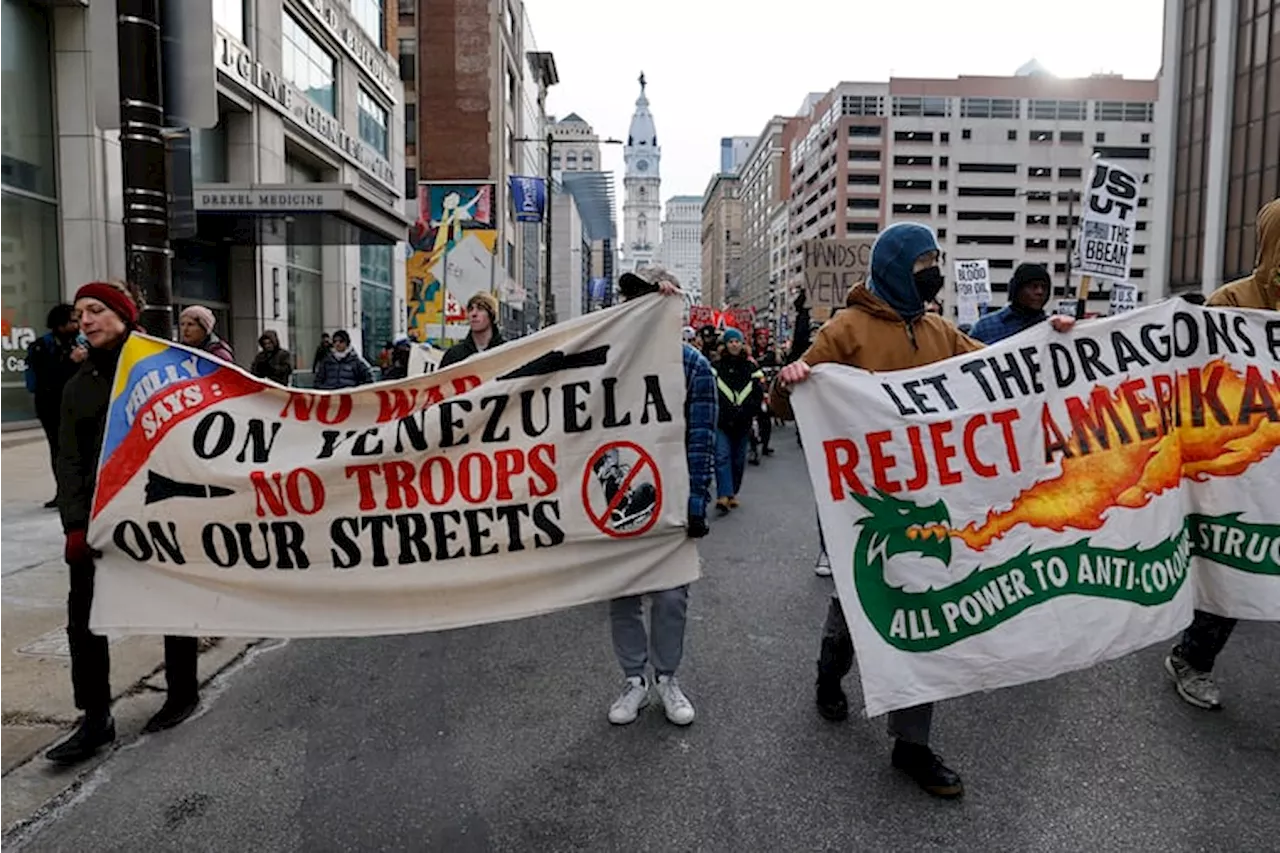
UPDATE: In a dramatic military operation early on January 3, 2026, U.S. forces successfully captured Venezuelan President Nicolás Maduro and his wife, Cilia Flores, from their home in Caracas. This unprecedented action has sent shockwaves through the international community and ignited strong reactions from Venezuelans in the United States, particularly in Philadelphia.
Witnesses reported hearing explosions in Caracas as U.S. military operations unfolded. One local resident, recounting the chaos, stated, “I was immediately scared… I did not think Caracas was going to get bombed.” Video footage documented smoke rising from the capital, illustrating the turmoil engulfing the city as Maduro was taken into custody.
The operation, which also involved airstrikes, was characterized by President Donald Trump as a necessary intervention to dismantle Maduro’s alleged involvement in drug trafficking and corruption. Trump announced plans for the U.S. to “run Venezuela” until a stable transition of power can be established. He emphasized the intention to restore Venezuela’s oil infrastructure and engage in large-scale oil exports, a move that has drawn criticism from various political figures.
Philadelphia’s Venezuelan community responded with a mix of relief and concern. Many expressed gratitude for the capture but also apprehension about the future. A local community leader stated, “No one wants to see their country getting bombed, but they gave us no alternative. I am grateful for the help.”
However, the operation has sparked severe backlash from lawmakers across the political spectrum. U.S. Rep. Brian Fitzpatrick condemned Trump’s unilateral approach, asserting, “Venezuela’s future belongs to the Venezuelan people alone.” The legal authority for the raid remains unclear, with critics arguing that Trump bypassed congressional approval for military action.
Democratic senator Chris Coons echoed these concerns, stating, “This raid risks creating more instability in the region, putting U.S. service members and civilians in the hemisphere at risk.” Lawmakers have raised alarms that such actions could further isolate the U.S. from its global allies.
In Philadelphia, approximately 7,000 Venezuelans are part of the metro area’s Latino population of 681,000. Local organizations, including Casa de Venezuela Philadelphia, have rallied to support the diaspora, calling for peace and unity during this tumultuous time. A vigil is scheduled for noon on Sunday at the Cathedral Basilica of Saints Peter and Paul, emphasizing the need for a peaceful resolution.
As the situation develops, the implications of this military intervention are profound. Many are left wondering what the future holds for Venezuela and how the international community will react to the U.S. actions. The emotional toll on the Venezuelan community in Philadelphia is palpable, with sentiments of uncertainty and hope intertwined. One restaurateur remarked, “There is so much uncertainty… I’m hopeful but it doesn’t feel like we are at the point where this is over.”
As the world watches closely, the ramifications of this military action will likely unfold in the coming days, positioning Venezuela at a critical crossroads.