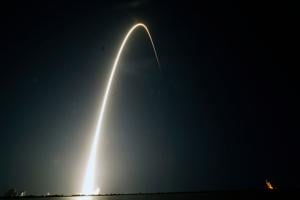
UPDATE: Western intelligence agencies have raised alarms that Russia is developing a new anti-satellite weapon specifically designed to target Elon Musk’s Starlink satellites. This disturbing intelligence, shared with The Associated Press, suggests that Russia’s weapon could unleash destructive clouds of shrapnel into orbit, threatening not only Starlink but also other vital satellite systems.
According to the findings, this so-called “zone-effect” weapon aims to flood Starlink’s operational orbits with hundreds of thousands of high-density pellets, potentially disabling multiple satellites simultaneously. The implications are dire—catastrophic collateral damage could ensue, creating chaos in space for numerous nations and companies that rely on satellite communications for defense and essential services.
Analysts express skepticism regarding the feasibility of such a weapon. Victoria Samson, a space-security specialist at the Secure World Foundation, stated, “I don’t buy it. Like, I really don’t.” She emphasized the potential for uncontrollable consequences, saying that any debris generated would pose significant risks to both Russian and allied space systems.
However, Brig. Gen. Christopher Horner, commander of the Canadian military’s Space Division, warned that the possibility cannot be dismissed. “If the reporting on the nuclear weapons system is accurate, then it wouldn’t strike me as shocking that something just short of that, but equally damaging, is within their wheelhouse of development,” he said.
The Kremlin has not commented on the claims but has previously voiced concerns regarding the deployment of weapons in space. President Vladimir Putin has publicly stated that Russia does not intend to develop nuclear space weaponry, despite allegations of previous advancements in this area.
Starlink has played a crucial role in supporting Ukraine amid the ongoing conflict, now in its fourth year. The high-speed internet service provided by Starlink has been vital for Ukrainian military operations and civilian communications in areas affected by Russian strikes.
This month, Russia announced the deployment of a new ground-based missile system, the S-500, capable of targeting low-orbit satellites. Unlike previous missile tests aimed at defunct satellites, this emerging weapon could release pellets designed to incapacitate multiple Starlink satellites at once.
Horner pointed out the inherent risks of using such a weapon, noting, “You blow up a box full of BBs. It would blanket an entire orbital regime and take out every Starlink satellite and every other satellite that’s in a similar regime.”
The intelligence findings, which remain unverified by independent sources, suggest that Russia may be in the early stages of developing this weapon. An official familiar with the situation revealed that the research is ongoing, but the timeline for potential deployment remains sensitive.
The prospect of such a weapon raises serious concerns about the stability of space operations. Analysts warn that the tiny pellets, measuring just millimeters across, could evade detection systems and complicate accountability for any resulting attacks. Clayton Swope, a space security expert, noted that if satellites began malfunctioning, it would be easy to connect the dots back to Moscow.
The potential for mass destruction from these tiny pellets is alarming. Previous incidents have shown that even small debris can severely damage spacecraft. “Most damage would probably be done to the solar panels because they’re probably the most fragile part,” Swope explained.
As the situation develops, experts suggest that such a weapon could serve as a tool of intimidation for Russia, allowing it to threaten adversaries without direct engagement. “It definitely feels like a weapon of fear, looking for some kind of deterrence,” Swope added.
Despite the grave implications, some analysts believe that the chaotic nature of such a pellet weapon could dissuade Russia from pursuing it, as it would also jeopardize their own space capabilities. Samson remarked, “They’ve invested a huge amount of time and money into being a space power. Using such a weapon would effectively cut off space for them as well.”
With tensions escalating and the geopolitical landscape shifting, the international community is urged to monitor these developments closely. The potential consequences of Russia’s actions could reshape the future of space security and global communications.