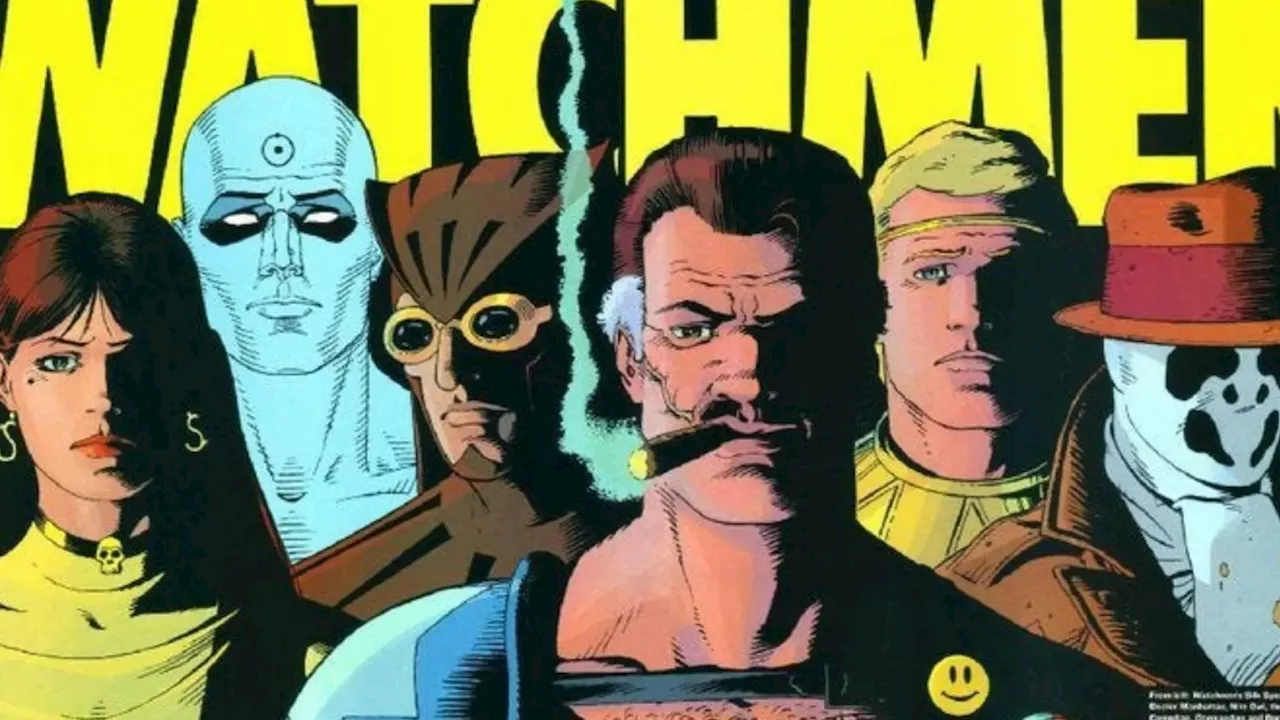
URGENT UPDATE: As the iconic comic Watchmen celebrates its 40th anniversary, critical conversations are igniting around its legacy and relevance in today’s shifting cultural landscape. Released between 1986 and 1987, this groundbreaking series by Alan Moore and Dave Gibbons redefined superhero narratives, but many now question whether its influence is being misinterpreted.
Latest discussions highlight the comic’s roots in the Cold War era, a time marked by nuclear fears and political corruption. Drawing parallels to the Watergate scandal and the Vietnam War, Watchmen served as a poignant critique of its time. However, experts argue that its continued status as the benchmark for superhero stories obscures the evolution of the genre since the late 1980s.
Critics assert that while Watchmen brilliantly utilized the nine-panel grid and layered storytelling, its heavy thematic weight risks becoming a relic. The comic’s dense narrative and deliberate pacing, they argue, may not resonate with contemporary audiences facing a vastly different social landscape.
In the decades following its release, the comic has inspired a wave of dark and gritty narratives in the industry. However, many creators appear to have misinterpreted its message, opting for shock value over nuanced storytelling. This has led to a proliferation of morally ambiguous heroes, often lacking the depth that Moore and Gibbons originally envisioned.
As Watchmen marks this milestone, the conversation is shifting. Are we clinging to a nostalgic ideal, or can new narratives emerge that reflect today’s complexities? The comic’s legacy is now under scrutiny, as audiences demand fresh perspectives that address modern anxieties rather than recycling past tropes.
What happens next? Expect ongoing discussions in the comic community as creators and fans alike reassess the impact of Watchmen on the evolution of superhero narratives. With the genre continually adapting, the need for innovative storytelling has never been more urgent.
Stay tuned for further developments as this critical debate unfolds, reshaping how we perceive not just Watchmen, but the entire superhero genre.