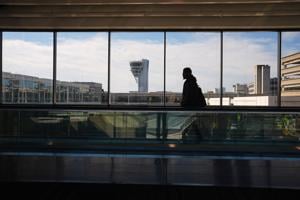
U.S. airlines are set to implement significant flight reductions at some of the nation’s busiest airports starting on Friday, October 6, 2023, due to the ongoing government shutdown. The Federal Aviation Administration (FAA) has ordered these cuts as a response to increasing staffing shortages among air traffic controllers who have been working without pay since the shutdown began on October 1.
The FAA’s directive targets 40 major airports across more than two dozen states, including major hubs in New York, Los Angeles, Dallas, and Chicago. These reductions are expected to disrupt travel plans for hundreds of thousands of passengers, with estimates suggesting up to 1,800 flights could be canceled daily, impacting more than 268,000 travelers.
Impacts on Major Travel Hubs
Airlines are tasked with phasing in the cuts, beginning with a 4% reduction in flights on Friday, escalating to 10% in the coming days. United Airlines has announced it will comply with the FAA’s guidance by cutting 4% of its scheduled flights over the weekend. “This is going to have a noticeable impact across the U.S. air transportation system,” said industry analyst Henry Harteveldt.
Affected airports include critical connecting hubs and popular destinations such as Atlanta, Denver, Orlando, Miami, and San Francisco. In major cities like New York, Houston, and Chicago, multiple airports will see significant reductions in service. Airlines are expected to prioritize cuts to routes serving small and medium-sized cities, further complicating travel for many.
As the implementation date approaches, travelers have been left in a state of uncertainty. Passengers are advised to check their flight statuses as cancellations began to roll out on Thursday. Some airlines, including United, Delta Air Lines, and American Airlines, have pledged to offer refunds for non-refundable tickets for those opting not to fly.
Challenges for Air Traffic Controllers
The FAA’s flight reductions are part of a broader strategy to ensure safety and alleviate pressure on air traffic controllers. Many controllers are experiencing heightened stress and fatigue due to the ongoing shutdown, leading to increased absenteeism. The agency’s measures aim to stabilize air traffic operations in light of these staffing challenges.
Controller staffing issues have intensified recently, with reports indicating that at least 39 air traffic control facilities faced potential staffing shortages over the past weekend. This situation represents a marked increase in challenges compared to periods before the shutdown, as controllers are often required to work mandatory overtime six days a week, leaving little room for additional income opportunities.
The shutdown’s effects extend beyond passenger travel. Significant disruptions to package deliveries are anticipated, particularly as two major airports with distribution centers — Memphis, Tennessee, where FedEx operates, and Louisville, Kentucky, home to UPS — are among those affected.
Travelers have already begun to modify their plans. Fallon Carter, who had intended to fly from New York to Tampa for a weekend beach trip, canceled her flight due to concerns about returning in time for her best friend’s wedding. “I don’t know if I get there, will I get home?” she expressed.
As the holiday travel season approaches, the ongoing flight reductions coupled with the uncertainty surrounding staffing and operations present a significant challenge for airlines and travelers alike. The situation has prompted concerns from industry leaders, including Geoff Freeman, President and CEO of the U.S. Travel Association, who indicated that the shutdown is undermining public confidence in the U.S. air travel experience.
The FAA has emphasized that safety remains its top priority, yet it acknowledges the unprecedented nature of the current situation. “We’re in new territory in terms of government shutdowns,” stated FAA Administrator Bryan Bedford. With no clear end in sight, airlines and travelers alike brace for the ongoing impact of the shutdown on air travel across the United States.