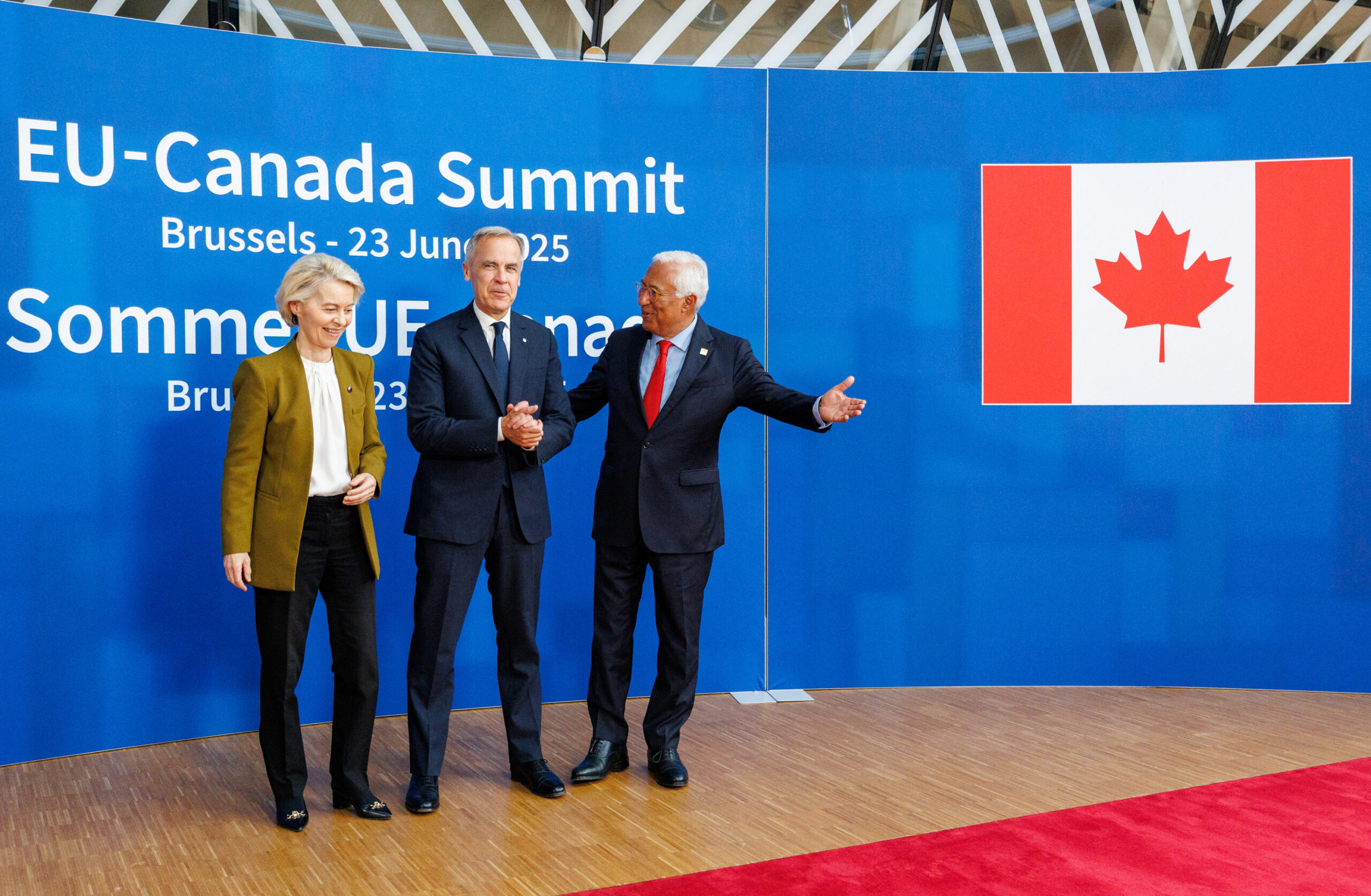
Canada has officially joined the European Union’s flagship defense initiative, Security Action for Europe (SAFE), marking a historic move as the first non-EU nation to participate. This week, Prime Minister Mark Carney announced the agreement, which opens the door for potential financing of Canada’s next-generation fighter jets and submarine purchases through a fund worth €150 billion.
The SAFE program aims to enhance military readiness across Europe by providing loans for joint procurement. Carney emphasized the benefits to Canadian businesses, stating, “Participation in SAFE will unlock billions of dollars in potential defense opportunities for Canadian businesses, attract new reliable suppliers for our Armed Forces, and open massive new opportunities for national manufacturers to build and export Canadian-made capabilities.”
Currently, Canada is navigating the procurement phase for its next-generation fighter jets. The government has already allocated funds for 16 initial F-35 aircraft, but it is also considering a mixed fleet, with the Swedish-made Gripen as a leading candidate. The details surrounding Canada’s participation in SAFE remain under negotiation, with both Ottawa and the EU working on finalizing a bilateral agreement that could streamline the process and possibly exempt Canada from specific regulations.
Under the SAFE guidelines, to qualify for funding, no more than 35% of a project’s component costs can come from outside the European Union, the European Economic Area, or Ukraine. Nevertheless, countries can gain access through financial contributions, though specifics regarding Canada’s commitment remain unclear. Reports suggest that negotiations surrounding this aspect previously stalled the United Kingdom’s potential entry into the program, as parties could not agree on the financial support amount.
As Canada pursues substantial defense procurement goals, Roger Hilton, a Canadian defense fellow at the Bratislava-based think tank GLOBSEC, indicated that financing options could extend to next-generation fighter aircraft, conventional submarines, and maritime domain awareness systems. He noted that Canada is likely to investigate SAFE opportunities for drones, anti-submarine warfare platforms, and secure satellite communications as well.
Projects funded through SAFE require collaboration between at least two partners, which typically include member states or a combination of a member state with Ukraine or an EFTA/EEA nation. Hilton anticipates that Canada will seek partnerships with European nations that align ideologically and strategically, particularly regarding Arctic security and North Atlantic defense.
“It is very probable that it will also gravitate towards states with the deepest aerospace and naval industries – notably France, Germany, Italy, Sweden, and Spain, as they have the industrial mass, design authority, and consortium models that SAFE favors,” Hilton stated.
As negotiations progress, Canada’s involvement in SAFE could significantly alter the landscape of its defense procurement strategies and enhance its military capabilities. The coming weeks will be crucial in determining the specifics of this partnership and its implications for Canadian defense industry growth.