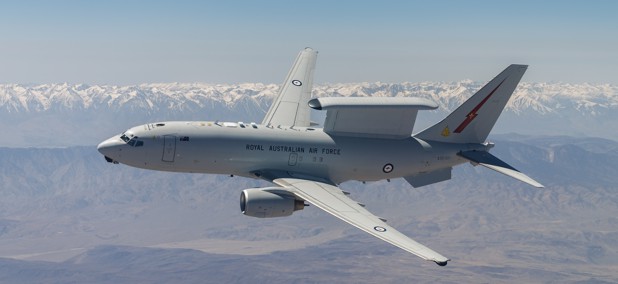
Funding for the U.S. Air Force’s new E-7 Wedgetail radar jet has been included in a bipartisan agreement to end the longest government shutdown in U.S. history. The agreement, reached on Sunday, allows for nearly $200 million to be allocated for ongoing development of the E-7 program, which is intended to transition into production.
The continuing resolution, which spans 31 pages, will fund the government through January 30, 2024. It includes provisions for “continued rapid prototyping activities to maintain program schedule” for the Air Force’s E-7 initiative. Similar funding efforts had been previously discussed in various legislative measures, including the National Defense Authorization Act and the Defense Appropriations Act over the summer, as well as a stopgap funding bill in September.
Legislative Support Amid Criticism
Senator Susan Collins, a Republican from Maine and chair of the Senate Appropriations Committee, expressed her support for the legislation, stating, “I look forward to voting for this legislation and ending the unnecessary harm to the security of our families and our nation.” While there are still procedural hurdles to clear before the agreement is finalized, the inclusion of the E-7 funding marks a significant victory for Boeing, the manufacturer of the Wedgetail.
Despite this legislative support, the future of the E-7 program appears uncertain. The Air Force has indicated plans to cut the program in its 2026 budget request, citing concerns about the E-7’s survivability and its effectiveness in modern combat scenarios. Defense Secretary Pete Hegseth has criticized the aircraft, stating that it does not provide a strategic advantage in future conflicts.
Concerns Over Modern Warfare Capabilities
The ongoing support for the E-7 radar aircraft has raised questions among defense experts, particularly regarding its viability compared to emerging technologies. Hegseth has highlighted a shift in focus towards space-based capabilities for intelligence and surveillance, suggesting that the military may prioritize these over traditional airborne platforms.
Todd Harrison, a defense budget expert at the American Enterprise Institute, commented on the situation, saying, “If it passes, this is a big win for Boeing, and it shows that many in Congress still have doubts about how quickly the Space Force can deploy the Airborne Moving-Target Indication systems.” This sentiment reflects a broader concern among lawmakers about the pace at which new technologies are developed and deployed.
The E-7 was originally proposed as a replacement for the aging E-3 Sentry aircraft. Boeing and the U.S. Air Force reached an agreement last year for two test planes, with a projected delivery date in 2028. The costs associated with this contract have escalated, with the Government Accountability Office reporting a 33 percent increase, amounting to an additional $884 million.
In September, the British government announced plans for the construction of the two E-7 prototypes in the United Kingdom, further complicating the narrative surrounding the aircraft’s future in the U.S. defense strategy. As Congress continues to navigate the complexities of defense funding, the fate of the E-7 Wedgetail remains uncertain, illustrating the ongoing tension between established military programs and the push for innovative technologies.