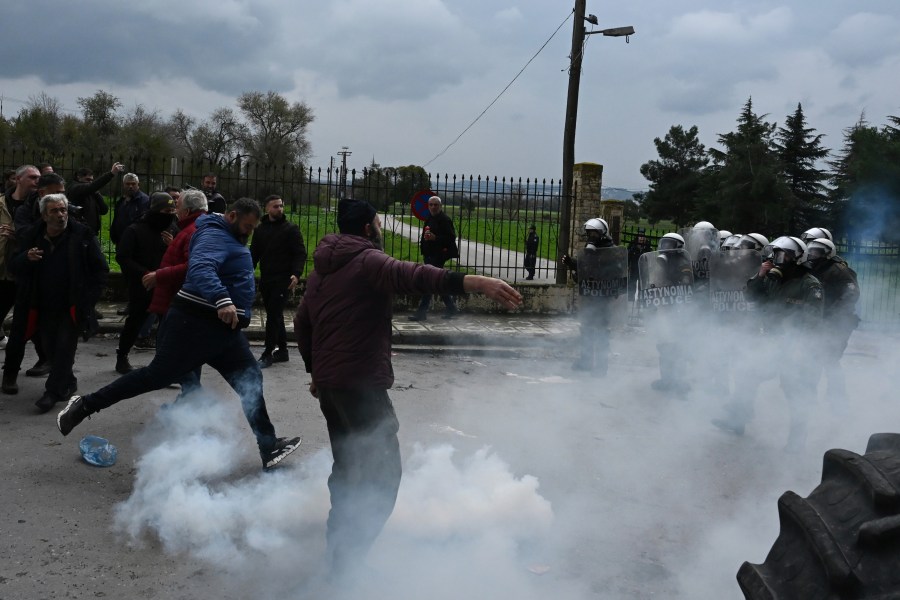
Protests erupted in Thessaloniki, Greece’s second-largest city, as farmers attempted to block access to the international airport on March 15, 2024. Riot police responded by firing tear gas to disperse the crowd, which was demanding timely payments of European Union-backed agricultural subsidies. The unrest reflects growing frustration among farmers who have deployed thousands of tractors and agricultural vehicles at key border crossings across the region.
The farmers’ grievances stem from significant delays in the disbursement of funds that are critical for their operations. Many have expressed anger over what they perceive as inadequate government support amid rising costs and economic pressures. The European Union has committed to providing these subsidies, but bureaucratic hurdles have led to frustration among those reliant on this financial assistance.
As tensions escalated, farmers blocked roads leading to the airport, disrupting traffic and causing delays for travelers. The protest marks a pivotal moment in the ongoing struggle between agricultural workers and the government, highlighting broader issues of economic stability and support for the farming sector.
Local authorities have stated that they are monitoring the situation closely, emphasizing the need for dialogue between the government and the agricultural community. The Ministry of Agriculture has yet to release a detailed response to the protests, but officials are expected to address the farmers’ concerns in the coming days.
The deployment of riot police underscores the seriousness of the situation. Clashes between farmers and law enforcement have raised concerns about public safety and the potential for further escalation. Many farmers argue that peaceful demonstrations should not be met with force, advocating for negotiations rather than confrontation.
The protests in Thessaloniki are part of a larger wave of demonstrations throughout Greece, where farmers are increasingly vocal about their struggles. Many in the agricultural sector are demanding not only immediate payments but also a long-term commitment from the government to ensure sustainable support.
As the situation develops, farmers remain determined to press their demands, with many planning to continue their demonstrations until their concerns are addressed. The impact of these protests on local commerce, especially in the lead-up to the busy tourist season, remains to be seen.
The farmers’ actions have drawn attention to the fragile state of the agricultural industry in Greece, which has faced numerous challenges in recent years. With many depending on subsidies to sustain their livelihoods, the outcome of this situation could have lasting implications for both the farmers and the broader economy.