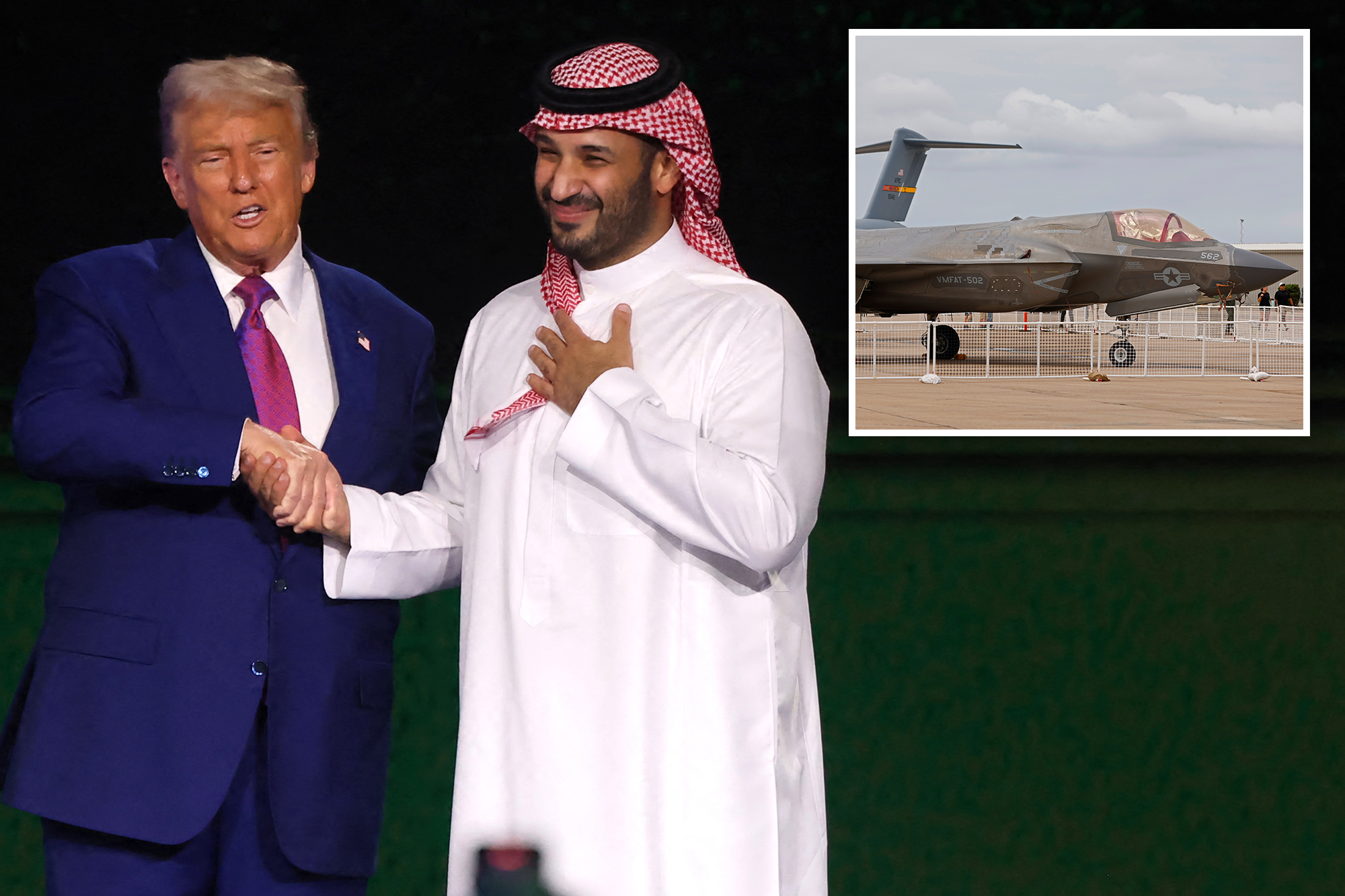
Israel is advocating for the United States to condition its sale of F-35 fighter jets to Saudi Arabia on the establishment of diplomatic ties between Riyadh and Jerusalem. An unnamed Israeli official confirmed this position, stating that Israel is not fundamentally opposed to the sale but insists it should be linked to Saudi Arabia’s progress in normalizing relations with Israel.
During discussions with the Trump administration, Israeli officials emphasized that any approval for F-35s to Saudi Arabia should be contingent upon the kingdom’s commitment to diplomatic normalization with Israel. The official noted, “We told the Trump administration that the supply of F-35s to Saudi Arabia needs to be subject to Saudi normalization with Israel,” as reported by Axios.
Concerns and Context
Israel’s concerns differ significantly from its stance on F-35 sales to Turkey, which it vehemently opposes. The Israeli official remarked, “We are less concerned about such weapons systems in Saudi Arabia if it’s part of a regional security cooperation as part of the Abraham Accords, like we have with the United Arab Emirates.”
This development comes as President Donald Trump and Saudi Crown Prince Mohammed bin Salman are scheduled to meet on March 15, 2024, at the White House. Their discussions will include a potential U.S.-Saudi mutual defense agreement, which could encompass the sale of the advanced F-35 jets.
Israel’s officials highlighted the geographical proximity between the nations, stating, “It takes minutes for an F-35 to fly from Saudi Arabia to Israel.” They further insisted that Saudi jets should not be stationed in the western part of Saudi Arabia, underscoring their security concerns.
Not conditioning the sale on normalized relations would be viewed as “counterproductive,” according to a senior Israeli official.
The F-35 Fighter Jet and Military Context
The F-35 is a cutting-edge stealth fighter jet, capable of reaching speeds up to Mach 1.6, or approximately 1,200 miles per hour. The aircraft comes in several variants: the F-35A for conventional takeoff and landing, the F-35B for vertical landings, and the F-35C designed for aircraft carriers. Each jet has a base price of at least $101.5 million.
Currently, Israel is the only Middle Eastern nation operating F-35s, with a total of 45 jets in its arsenal and an additional 30 on order, according to the Times of Israel. In contrast, Trump noted that Saudi Arabia expresses a strong interest in acquiring “a lot” of fighter jets, with estimates suggesting the kingdom could spend billions on as many as 48 planes.
In May 2017, Trump signed a historic defense sales agreement with Saudi Arabia worth $142 billion. This landmark deal included provisions for the U.S. to supply the kingdom with advanced military equipment and services from various American defense firms. At that time, Trump voiced his hope that Saudi Arabia would eventually join the Abraham Accords, a series of agreements that have fostered normalization between Israel and several Muslim-majority countries.
Saudi Arabia has indicated that its participation in the Abraham Accords hinges on Israel’s willingness to support Palestinian statehood, a complex issue that continues to be a significant barrier to progress in the region.
On March 16, 2024, Crown Prince Mohammed bin Salman will also participate in a meeting at the Kennedy Center, engaging with numerous CEOs from across the United States. This visit marks his first trip to the U.S. since the controversial assassination of journalist Jamal Khashoggi in the Saudi consulate in Istanbul in 2018, an event that has strained relations between Saudi Arabia and several Western nations.
As these diplomatic discussions unfold, the implications of any agreement regarding military sales and normalization efforts will be closely watched by both regional and international stakeholders.