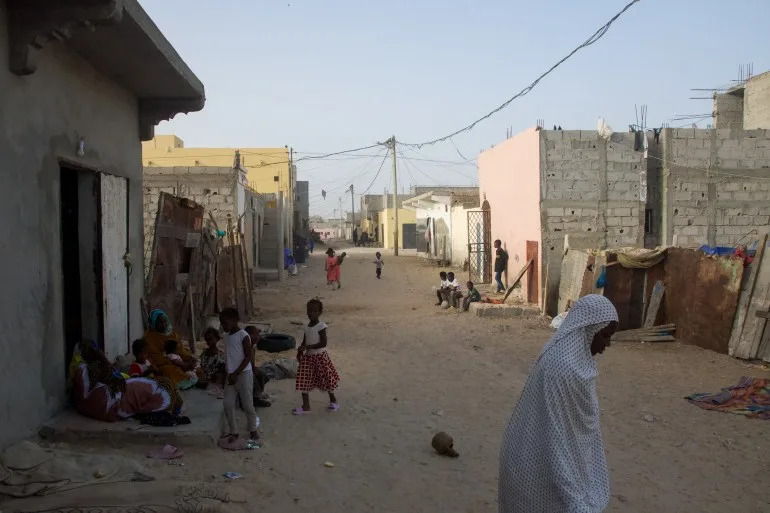
In a significant crackdown on migration, Mauritania has intensified its deportation campaign, targeting thousands of African migrants. Since March 2024, police actions in cities like Nouadhibou have led to widespread fear and displacement among the migrant population. Many, including those with valid residency permits, have been rounded up, detained, and forcibly expelled from the country.
Omar, a 29-year-old bricklayer from rural Gambia, moved to Nouadhibou seeking better opportunities in March. He settled in a shared one-room shack with friends, earning two to three times his previous income. This allowed him to support his family back home and pay for his younger siblings’ education. However, his life took a drastic turn in August when police began conducting mass sweeps in the city, targeting construction sites where many undocumented migrants worked. With no residence permit, Omar limited his movements but was soon forced to flee as police began breaking down doors in search of migrants.
The Mauritanian Association for Human Rights (AMDH) reported that approximately 1,200 migrants were deported in March alone, with around 700 of those individuals holding residence permits. The government has not disclosed specific figures regarding the deportations, but government spokesman Houssein Ould Medou noted that 130,000 migrants entered Mauritania in 2022, while only 7,000 renewed their residence permits that year.
Officials, including Interior Minister Mohamad Ahmed Ould Mohamed Lemine, have defended the government’s actions as necessary for controlling immigration. He emphasized the state’s right to manage foreign movement while assuring that deportees would receive adequate food, water, and medical services. Despite these claims, rights groups and opposition politicians have criticized the deportation conditions as “cruel and degrading.”
The deportation initiative has drawn attention due to its timing, coming shortly after the European Commission announced a €210 million (approximately $248 million) migration partnership with Mauritania. This funding aims to enhance security and “migration management,” alongside investments in socioeconomic services for refugees and host communities. Experts have linked this campaign to broader EU efforts to curb irregular migration from Africa, particularly given Mauritania’s proximity to Spain’s Canary Islands, a key migration route.
The crackdown has left many migrants fearful and confused. An Ivorian construction worker, Traore, recounted multiple arrests in a short span, with police raids leading to demands for bribes for release. The pressure to pay off authorities has left many unable to afford living expenses or return home. “We don’t know what to do,” shared Obi, an electrician from the Ivory Coast.
The conditions faced by those detained have been dire. Omar described a lack of food during his three-day detention, with police demanding exorbitant prices for basic provisions. Others like Youssouf, a Guinean, recounted being denied access to personal belongings during their arrest, leading to humiliation and trauma.
Women and children have not been spared in this campaign. Mariam, a mother from Sierra Leone, was apprehended while seeking medicine for her sick child. She described her detention as akin to being held in a “cattle shed,” where her children were also kept. After two days, her husband’s employer paid a bribe for their release, but many others remain separated from their families.
The deportation process typically involves transporting migrants from Nouadhibou to detention facilities in the capital, Nouakchott, before sending them toward the borders. Detainees report harsh treatment, including being chained together during transport and denied basic rights.
Once at the border, many migrants, even those possessing valid documentation, have been denied entry into Senegal and forced to return to Mauritania. Omar and his friends faced this situation, ultimately resorting to smuggling across the river to avoid being sent back.
As the deportation campaign continues, its impact on the lives of thousands remains profound. Omar, who returned to Gambia after his ordeal, expressed mixed feelings. He longs for the stability and work he found in Nouadhibou but is also relieved to be free from the constant threat of arrest. “If they stop deporting people, I’ll go back,” he stated, highlighting the difficult choices faced by many migrants seeking better lives.
The Mauritanian government has not responded to requests for comment regarding the allegations of human rights abuses. The international community continues to watch closely as the situation unfolds, with the potential for further scrutiny on the treatment of migrants in the region.