North Korea has accused South Korea of violating its sovereignty through drone incursions, warning that Seoul will “pay a high price” for what it termed a provocative act. The claim, made on Saturday, follows North Korea’s assertion that incidents occurred in September 2023 and earlier this week. In response, South Korea’s defense ministry firmly rejected these allegations, stating that its military did not deploy drones on the dates cited by the North.
A spokesperson from the Korean People’s Army issued a statement condemning South Korea, describing it as “the most hostile” enemy. This statement emphasized that South Korea has continued to engage in provocative actions, contrasting with its attempts to initiate dialogue with Pyongyang. According to the spokesperson, “The Republic of Korea (ROK) should be ready to pay a high price for having committed another provocation of infringing on the sovereignty of the DPRK,” referring to North Korea’s official name, the Democratic People’s Republic of Korea.
On January 4, 2024, North Korea reported capturing and tracking an aerial target moving northward over Ganghwa County, Incheon. They claimed to have used electronic warfare measures to force the drone down near Kaesong, a border city. In addition, North Korea stated that a drone originating from South Korea’s Paju fell in Jangphung County on September 27, 2023, after being struck by North Korean electronic means. The North alleged that this drone was equipped with surveillance devices and was set to record key locations in its territory.
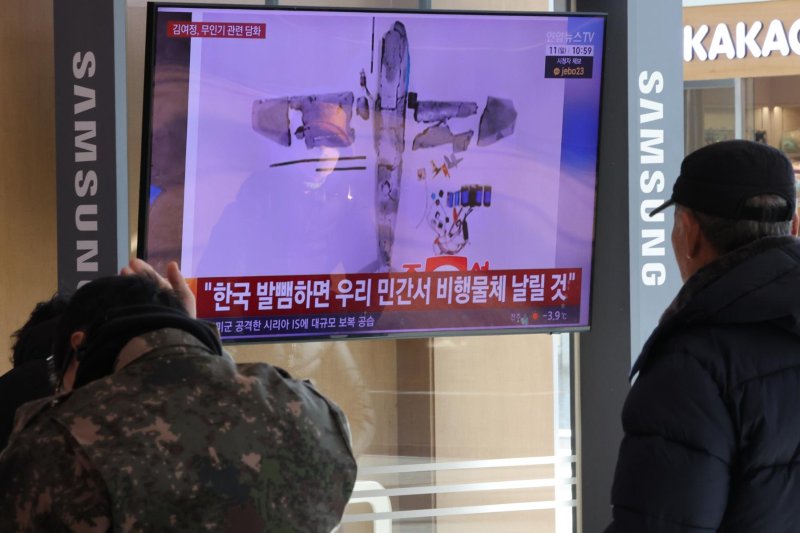
North Korea released images of debris from the drones, including purported recordings from the unmanned aerial vehicles. In a striking comparison, the North described South Korea as a “perfect copy of Kiev’s lunatics,” likening it to Ukraine in its conflict with Russia. The North’s military accused the South of allowing drones to bypass radar and anti-drone systems, asserting that this demonstrated South Korea’s hostile intent.
“The ROK is the enemy most hostile towards us that can never be changed in nature,” the spokesperson warned, reiterating that any military aggression would lead to consequences. In light of these claims, South Korean Defense Minister Ahn Gyu-back dismissed North Korea’s assertions as “absolutely not true.” He noted that the drones depicted in North Korean photographs do not match the models owned by the South Korean military.
The South Korean defense ministry has initiated a “thorough” investigation into the incidents, with President Lee Jae Myung overseeing the verification process. Experts have suggested that the drones showcased by North Korea do not appear to belong to military classifications, indicating they might have been constructed from low-cost, non-military components.
In the past, North Korea has raised similar concerns. In October 2024, it claimed to have detected South Korean drones carrying anti-North Korean propaganda over Pyongyang, issuing threats of retaliation if such flights continued. Allegations have emerged that during former President Yoon Suk Yeol‘s administration, South Korean drones were sent over Pyongyang as part of a strategy to provoke North Korea.
These recent claims come amid heightened tensions, as North Korean leader Kim Jong-un has characterized inter-Korean relations as those between “two states hostile to each other.” Since taking office in June, President Lee’s administration has sought to repair relationships with North Korea and reignite dialogue. However, analysts suggest that North Korea is solidifying its hardline stance ahead of an important party congress scheduled for January or February, where it is expected to outline a comprehensive five-year policy plan.
According to Hong Min, a senior researcher at the Korea Institute for National Unification, North Korea is likely to formalize its “two hostile states” position in party regulations and possibly revise its constitution in upcoming parliamentary sessions. These developments underscore the ongoing complexities and challenges in inter-Korean relations, as both nations navigate a path fraught with tension and mistrust.