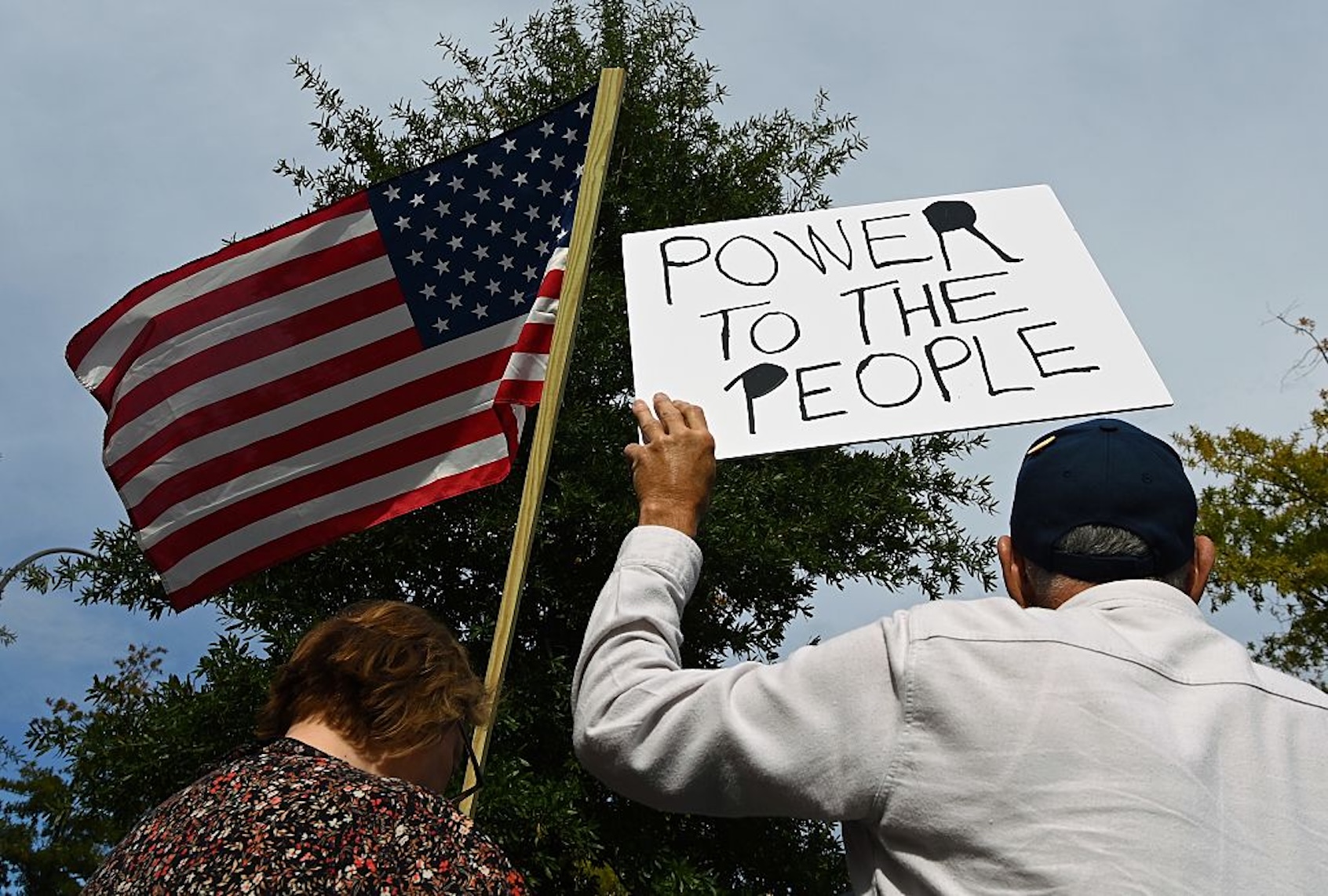
In a recent interview with Fox Business, former President Donald Trump asserted that the United States is experiencing “the greatest period of anything we’ve ever seen.” This bold claim, however, is met with skepticism as various polls suggest that many Americans hold a markedly different perspective on the current state of the nation.
Polls indicate a growing sense of pessimism among the American populace. According to the Gallup National Health and Well-Being Index, fewer Americans believe they will enjoy high-quality lives in five years than at any time since the survey began two decades ago. Only 48% of respondents identified as “thriving,” down from previous years.
Discontent is evident in the findings of Rasmussen Reports, which revealed that only 27% of Americans view the current era as a “Golden Age,” while 58% do not. Moreover, a significant 48% of voters expressed that they consider Joe Biden to have been the better president, compared to 40% who favored Trump. This marks a notable shift from December when Trump had a slight lead.
The results point to a broader trend of disillusionment, impacting even traditionally supportive demographics. While partisan divides influence public perception, even some of Trump’s staunch supporters appear to be grappling with the harsh realities of the current socio-political climate.
Athletes at the Winter Olympics have also voiced concerns reflective of this national sentiment. Ski racer Hunter Hess sparked controversy by stating, “Just because I’m wearing the flag doesn’t mean I represent everything that’s going on in the U.S.” Trump’s reaction was swift and harsh, labeling Hess a “loser” and questioning his place on the team.
The backlash against mild criticisms of the U.S. from some athletes has prompted responses from prominent figures. Pete Hegseth, the Defense Secretary, echoed sentiments suggesting that Hess should be disqualified, while Senator Mike Lee from Utah insisted that athletes should demonstrate patriotism abroad.
Such reactions highlight a growing disconnection between the leadership and a segment of the younger generation. Many athletes, including cross-country skier Jessie Diggins, have emphasized values of acceptance, compassion, and respect, distancing themselves from the divisive rhetoric associated with Trump’s administration.
Rich Ruohonen, the oldest American competitor at the Winter Olympics, also criticized authoritarian tactics, underscoring a deep-rooted desire among many citizens for a more inclusive representation of American values. As of now, no American athlete has publicly supported Trump’s policies during the games.
Historically, protests at the Olympics have drawn criticism from conservative factions, with the mantra of “Love it or leave it” often invoked. Yet, Trump’s critical stance on America and its citizens seems to complicate this narrative. His assertions of national success stand in stark contrast to the sentiments of many who feel the country is plagued by division and discontent.
The perception of America as a “shining city on a hill” has shifted, as optimism about the future wanes. Young athletes advocating for diversity and social justice represent a different vision of American identity, one that resonates with a significant portion of the population.
An illustration of this new perspective was evident during the Super Bowl, where global superstar Bad Bunny performed, promoting messages of inclusion to an audience of over 128 million viewers. His performance reflected the values that many Americans aspire to, providing a counter-narrative to the bleak assessments of the current administration.
While challenges persist and pessimism remains prevalent, the resilience displayed by individuals from various walks of life suggests a potential for change. The contrasting visions of America represented by Trump and these emerging voices indicate that the so-called “Golden Age” may indeed be evolving—just not in the way Trump envisions.