U.S. President Donald Trump hosted the leaders of Congo and Rwanda on March 15, 2024, for a significant signing of the Washington Accords for Peace and Prosperity. This agreement aims to address the ongoing conflict in eastern Congo and facilitate access to the region’s vital mineral resources for the U.S. government and American businesses. The deal, described by the White House as “historic,” follows months of diplomatic efforts involving the African Union and Qatar.
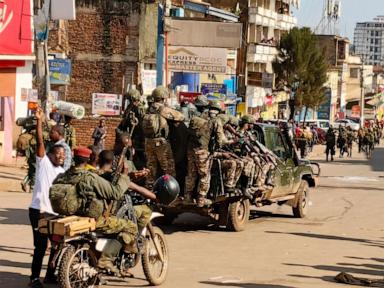
The conflict in eastern Congo has persisted for decades, with over 100 armed groups operating in the region. Among them, the M23 rebels, allegedly backed by Rwanda, have intensified their activities, capturing key cities such as Goma and Bukavu earlier this year. This escalation has exacerbated a humanitarian crisis, displacing millions and leaving many residents in dire conditions.
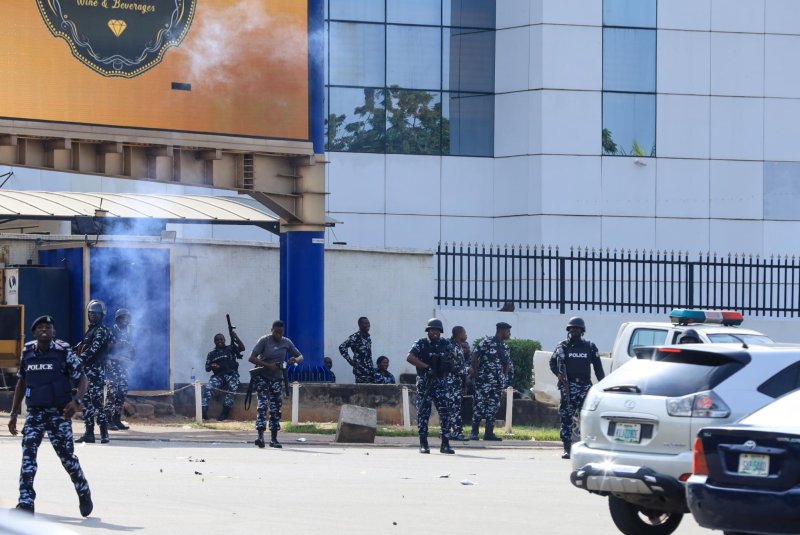
Despite the optimism surrounding the signing of the agreement, the situation on the ground remains tense. Clashes between the M23 rebels and Congolese forces continue, illustrating the fragile state of security. “We are still at war,” stated Amani Chibalonza Edith, a Goma resident. “There can be no peace as long as the front lines remain active.”
Key Details of the Agreement
The Washington Accords build upon a prior peace agreement established in June 2023 and focus on economic partnerships among the three nations. This includes a Regional Economic Integration Framework designed to enhance cooperation in critical sectors such as minerals, energy, and tourism. Officials from the Trump administration view this as an opportunity to reduce American reliance on China, which currently dominates the rare earth minerals market, controlling approximately 70% of global mining and 90% of processing.
In a series of planned discussions, Trump is expected to meet separately with both President Felix Tshisekedi of Congo and President Paul Kagame of Rwanda before the tripartite talks commence. The signing event will take place at the U.S. Institute of Peace in Washington, attracting several African leaders and American business representatives. According to Yolande Makolo, a senior adviser to Kagame, the discussions will focus on investment opportunities in critical minerals, energy, and tourism.
Challenges Ahead
Despite the intentions behind the agreement, analysts caution that a swift resolution to the conflict is unlikely. A separate peace deal has already been signed between Congo and the M23 rebels, but fighting persists. In recent weeks, reports of clashes in the South Kivu province have surfaced, with thousands fleeing their homes.
The humanitarian situation in eastern Congo has deteriorated further, compounded by cuts in U.S. funding that were essential for aid support. In Goma, once a bustling city of around 2 million people, the international airport remains closed, essential government services are suspended, and residents face increasing crime rates and rising prices. “We are waiting to see what will happen because so far, both sides continue to clash and attack each other,” expressed Moise Bauma, a 27-year-old student in Bukavu.
Both Congolese and Rwandan officials have emphasized the importance of American involvement in fostering peace. “We need that attention from the administration to continue to get to where we need to get to,” Makolo said, underscoring the complexity of achieving lasting peace. “We are under no illusion that this is going to be easy. This is not the end, but it’s a good step.”
The roots of this conflict trace back to the aftermath of the 1994 Rwandan genocide, which led to significant demographic shifts and ongoing tensions between ethnic groups. Rwanda has accused Hutu militias, who fled to Congo following the genocide, of perpetuating violence and instability, while Congo’s government insists that peace cannot be achieved without the withdrawal of Rwandan support for the M23.
U.N. experts estimate that between 3,000 and 4,000 Rwandan forces operate in eastern Congo, often alongside M23 fighters. While Rwanda denies these claims, it maintains that any military action is purely defensive, aimed at protecting its territory.
As the signing of the Washington Accords concludes, the eyes of the international community remain focused on the region, hopeful for a shift towards peace, yet acutely aware of the challenges that lie ahead.