On March 15, 2024, a U.S. special forces operation resulted in the capture of Venezuelan President Nicolás Maduro, igniting hopes for a potential democratic shift in the country. Despite this significant event, the political landscape remains unchanged, largely due to the continued influence of Diosdado Cabello, Maduro’s hardline enforcer, who has retained a prominent role under interim President Delcy Rodríguez.
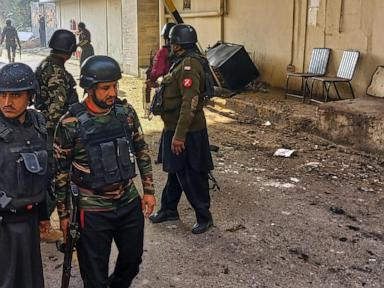
Following the U.S. operation, Cabello, currently serving as Venezuela’s Interior Minister, appeared publicly in Caracas. Dressed in a helmet and flak jacket, he condemned the U.S. intervention as a “cowardly attack” and urged citizens to resist what he characterized as a “terrorist enemy.” Standing alongside armed security forces, Cabello called for solidarity to defend Venezuela’s sovereignty and warned that any perceived traitors would face repercussions for questioning the Bolivarian revolution.
Cabello’s Continued Power Amidst U.S. Charges
Cabello, along with Maduro and several associates, has been indicted in the United States on charges of drug trafficking and narco-terrorism. The U.S. government is offering a reward of up to $25 million for information leading to his arrest, alleging that Cabello is a key figure in the Cartel de los Soles, a network accused of facilitating cocaine shipments to the United States. Despite the severity of these allegations, Cabello remains a central figure in Venezuela’s government, maintaining significant authority even as the administration attempts to recalibrate its relationship with Washington following Maduro’s ousting.
During a recent White House news conference, U.S. President Donald Trump did not acknowledge Cabello’s name, highlighting a disconnect between U.S. perceptions and Cabello’s notorious reputation within Venezuela. At 62, Cabello is recognized not only for his close ties to the late Hugo Chávez but also for his pivotal role in the country’s political turmoil. The two men participated in a failed military coup in 1992, which resulted in their imprisonment, but following their release, both ascended to power, with Cabello becoming a key member of Chávez’s inner circle.
Throughout his political career, Cabello has held numerous significant positions, including head of Venezuela’s telecommunications regulator, where he played a crucial role in suppressing media outlets critical of the government. His brief tenure as interim president during a coup in 2002 further solidified his status within the regime, though he had long been positioned as a potential successor to Chávez. Ultimately, Chávez’s endorsement of Maduro as his successor before his death in 2013 shifted Cabello’s trajectory, pushing him into leadership roles within the National Assembly and the ruling Socialist Party.
Impact on Venezuelan Society and Prospects for Change
Cabello’s rivalry with Maduro has complicated the latter’s governance. In 2024, as protests erupted over allegations of electoral fraud, Maduro appointed Cabello as Interior Minister to quell dissent. This led to a violent crackdown resulting in 24 fatalities and over 2,000 arrests, according to Human Rights Watch. Now, under Rodríguez’s interim presidency, Cabello continues to exert control over Venezuela’s police and pro-government militia groups known as colectivos.
Former Venezuelan public prosecutor Zair Mundaray asserts that the business environment desired by the Trump administration for exploiting Venezuelan oil remains elusive as long as Cabello is in power. “How can you have legal stability when you have this guy who has armed thugs in the streets and who can create chaos?” Mundaray questioned. Activists also cite Cabello’s role in delaying the release of political prisoners, a government initiative announced to promote national unity.
On his weekly television program, Con el Mazo Dando (“Hitting with the Hammer”), Cabello continues to attack dissenters, recently labeling opposition leader and Nobel Peace Prize recipient Maria Corina Machado a “fugitive from Venezuelan justice.” This climate of hostility discourages many opposition figures from returning to Venezuela, citing safety concerns as long as Cabello and military leaders such as Defense Minister Vladimir Padrino López remain influential.
During a panel discussion at Harvard University, Venezuelan economist Ricardo Hausmann emphasized the ongoing risks, stating, “You have Diosdado Cabello as head of the police. The government in Venezuela is the same Chavista government we saw before.” He warned that this situation could hinder the democratic transition sought by the Trump administration.
Cabello may face a pivotal decision in the coming months. He could negotiate for exile or choose to cooperate with the interim government, seeking to maintain his power while navigating the shifting political landscape. Geoff Ramsey, a Venezuela analyst at the Atlantic Council, noted that Cabello’s best opportunity for survival may lie in aligning with Rodríguez. “But that doesn’t mean he’s going to give up his longstanding ambitions,” Ramsey cautioned.