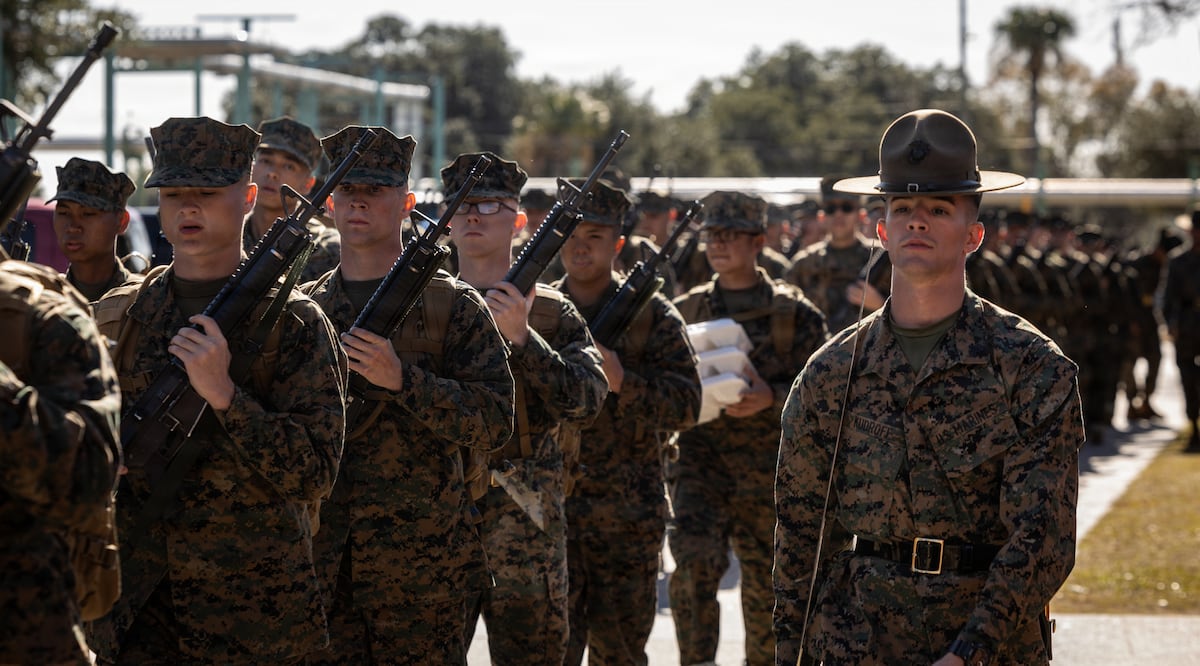
The U.S. Department of Defense is set to revive the long-dormant military exercise known as Nifty Nugget, originally conducted in 1978. The revival follows a provision included in the fiscal 2026 National Defense Authorization Act, which was signed into law by President Donald Trump in December 2023. This initiative aims to evaluate the military’s capability to mobilize rapidly in response to high-intensity conflicts, particularly in the Indo-Pacific region.
The original Nifty Nugget exercise aimed to simulate the global mobilization of U.S. forces in the event of an existential threat. However, it exposed significant deficiencies in planning, communication, and logistics. The chaotic exercise saw up to 500,000 troops arriving late to a fictional conflict in Europe, resulting in approximately 400,000 U.S. casualties. While it led to the establishment of the U.S. Transportation Command in 1987, the concept of mass mobilization exercises was largely abandoned until now.
The new study mandated by the NDAA will focus on assessing the ability of the Armed Forces to respond to potential conflicts involving the Taiwan Strait, South China Sea, or other similar flashpoints. It requires the collaboration of the Secretary of Defense, the Chairman of the Joint Chiefs of Staff, and the Commander of U.S. Indo-Pacific Command to analyze the military’s capabilities for rapid mobilization and deployment.
In light of escalating threats from China regarding Taiwan, this requirement underscores a heightened focus on military readiness. The mandated study will evaluate various factors, including logistical capabilities, interagency coordination, and joint interoperability with allies such as Japan, Australia, the Philippines, and Taiwan. It will also compile an inventory of civilian skills within the military’s Reserve component, encompassing foreign language proficiency, advanced academic degrees, and experience in high-demand fields like cybersecurity.
Findings from the study, due in 2025, must address best practices and data analyses that estimate the availability of reservists to support active units during the initial days of a major conflict in the Pacific. This effort follows a 2024 report from the Center for a New American Security, which highlighted the challenges the U.S. would face in mobilizing conscripts if a draft were reinstated. The report indicated that, under optimal conditions, it could take about seven months to mobilize 100,000 conscripts, while less favorable circumstances could extend that timeline to over three years.
Katherine Kuzminski, the primary author of the CNAS report, remarked on the significance of the new NDAA provision. She noted that the revival of mobilization trials reflects lawmakers’ serious consideration of the potential for major conflict in the Indo-Pacific. Kuzminski emphasized that while the original Nifty Nugget exercise was deemed a failure, its true purpose was to identify gaps in military readiness, a goal that remains relevant today.
The study will also explore the implications of emerging technologies and social dynamics on mobilization, including the potential influence of social media on the willingness of reservists to respond to activation orders. Kuzminski stated, “I think there are a lot of gaps and seams that will be uncovered in a 2025 scenario, just like we had in 1978.”
While the revival of Nifty Nugget may evoke skepticism due to its historical context, it represents a critical opportunity for the U.S. military to reassess and enhance its readiness for future conflicts. The exercise aims to shed light on vital aspects of mobilization that are often overshadowed, particularly the human cost associated with warfare. The upcoming study will play a crucial role in ensuring that the military is prepared for the complexities of potential future engagements.