The United States has seized two oil tankers connected to Venezuela, taking decisive action in both the North Atlantic and the Caribbean Sea. The U.S. European Command announced the capture of the vessel Bella 1 for violating U.S. sanctions, while Secretary of Homeland Security Kristi Noem revealed that the tanker Sophia was also seized during the operation. Both vessels were reportedly docked in Venezuela or en route to the country, as part of a larger fleet that defies Western sanctions by transporting oil from Russia, Iran, and Venezuela to customers primarily in Asia.
In a significant policy shift, the U.S. government is selectively lifting sanctions to facilitate the sale of Venezuelan oil on global markets. According to an outline released by the Energy Department, sales are set to commence immediately, with projections of between 30 million and 50 million barrels coming from Venezuela. The proceeds from these transactions will be deposited in U.S.-controlled accounts at “globally recognized banks,” to be allocated at the discretion of the administration.
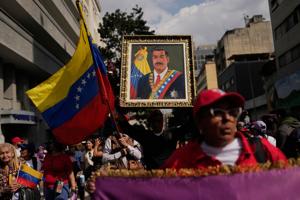
The seizures of the Bella 1 and Sophia occur shortly after a surprise nighttime operation in Caracas, where U.S. military forces apprehended former President Nicolás Maduro and his wife. The Trump administration has accused Maduro of collaborating with drug traffickers. Following this raid, officials indicated that efforts to capture additional sanctioned vessels would continue. Secretary of State Marco Rubio affirmed, “We are enforcing American laws with regards to oil sanctions.”
The Bella 1, previously sanctioned in 2024 for allegedly smuggling cargo associated with the militant group Hezbollah, had been monitored closely. It attempted to evade U.S. authorities by altering its course towards Europe after initially heading to the Caribbean. The U.S. Coast Guard cutter Munro tracked the vessel and executed the seizure under a warrant issued by a federal court.
The circumstances surrounding the Bella 1’s activities reveal its recent renaming to Marinera and a change in its flag to Russian. Tracking technologies indicated its position between Scotland and Iceland shortly before the seizure, prompting responses from U.S. military aircraft in the area. Russia’s Foreign Ministry expressed concern over the situation, emphasizing that no state has the right to use force against vessels registered in another country’s jurisdiction, citing the 1982 U.N. Convention on the Law of the Sea.
During a court appearance in New York, Maduro protested his capture, pleading not guilty to federal drug trafficking charges. His attorney indicated intentions to challenge the legality of what they termed his “military abduction.” “I am here kidnapped since January 3,” Maduro stated in court. “I was captured at my home in Caracas.”
The evolving situation underscores the complex dynamics surrounding U.S. sanctions on Venezuela and the broader geopolitical implications of oil trade and military operations in the region.