
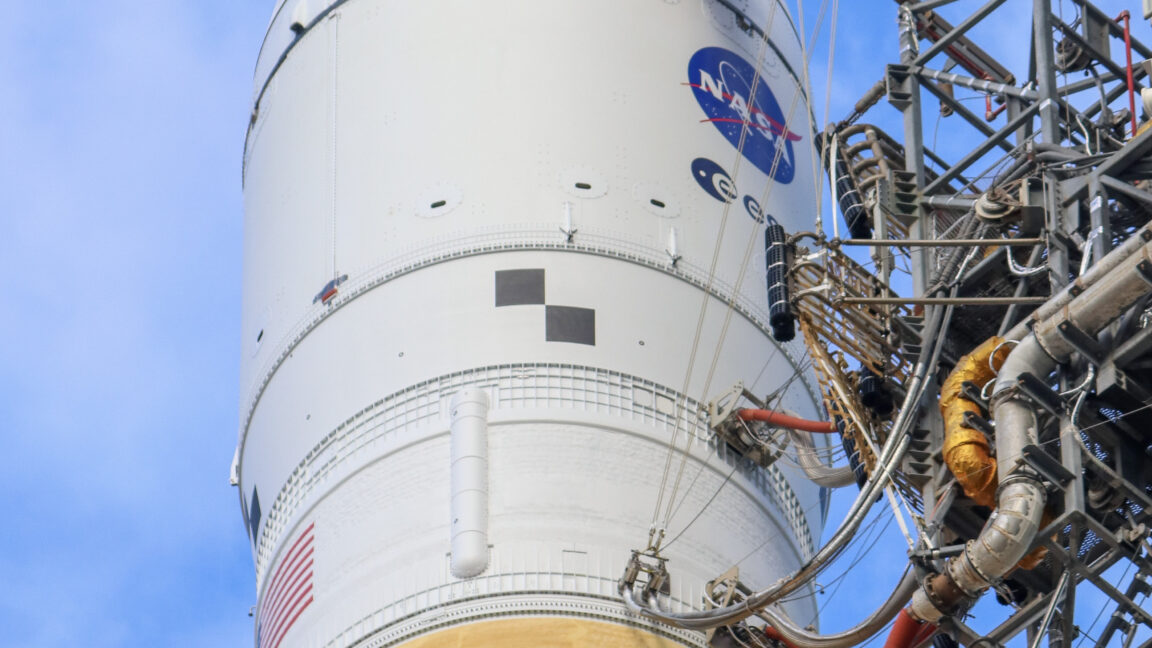
NASA has announced that it will return the Artemis II rocket to the Vehicle Assembly Building (VAB) for necessary repairs, following the discovery of a helium flow issue. The decision came just a day after optimistic statements from agency officials regarding a potential launch window around March 6, 2024. NASA Administrator Jared Isaacman disclosed the problem late Saturday, indicating that engineers are still investigating the root cause of the helium interruption.
This issue emerged on the evening of March 1, when data indicated a disruption in helium flow to the upper stage of the Space Launch System (SLS) rocket. Isaacman emphasized that any fixes must occur inside the VAB, prompting immediate preparations to roll the 322-foot-tall (98-meter) rocket off Launch Complex 39B. The rocket will be transported back to the VAB via NASA’s crawler-transporter, covering a distance of four miles.
“Regardless of the potential fault, accessing and remediating any of these issues can only be performed in the VAB,” Isaacman noted. This setback means the March launch window is no longer feasible, disappointing both the public and the dedicated teams at NASA who have been preparing for this historic mission.
NASA had been targeting a launch attempt for Artemis II as early as March 6, with a total of five potential launch opportunities throughout the month. These dates are critical, as they are determined by the Moon’s position, the flight’s trajectory, and various thermal and lighting constraints. Should repairs proceed efficiently, the next series of launch dates will begin on April 1.
Earlier this month, NASA had already bypassed launch opportunities after a fueling test revealed a hydrogen leak. Following the replacement of seals in the fueling line, a subsequent test on March 1 showed promising results, raising hopes for a March launch. However, the newly discovered helium issue has now ruled out those dates.
The helium system in question is part of the Interim Cryogenic Propulsion Stage (ICPS) on the SLS upper stage, which had performed well during previous countdown rehearsals. Isaacman explained that the failure occurred during a routine operation to repressurize the system. Helium is crucial for purging the upper stage engine and pressurizing its propellant tanks. NASA confirmed that the rocket is currently in a “safe configuration,” with a backup system providing purge air.
Historically, NASA has dealt with similar issues. During preparations for the Artemis I mission in 2022, a problem was traced back to a failed check valve on the upper stage. At this point, NASA officials have not determined if the current helium issue stems from a similar valve failure, an issue with the umbilical interface, or a fault with a filter.
Regardless, technicians cannot access the affected area while the rocket remains on the launch pad. Once inside the VAB, ground teams will set up work platforms to provide physical access to the upper stage and its connections. By initiating the rollback process now, NASA aims to preserve the April launch window, contingent upon repair outcomes and data findings in the coming days.
The agency is also expected to replace batteries on the rocket’s flight termination system during its time in the VAB. These batteries are set to expire next month.
Artemis II represents a significant milestone as it will be the first human spaceflight mission to the vicinity of the Moon since 1972. It also marks the inaugural flight of astronauts aboard NASA’s SLS rocket and Orion spacecraft. Crew members, including astronaut Reid Wiseman and pilot Victor Glover, entered a standard preflight medical quarantine on March 1, but they have now been released to resume their normal training activities.
The Artemis missions are intended as precursors for future lunar landings, particularly targeting the Moon’s south pole. NASA aims to achieve a landing by 2028, although the timeline remains uncertain due to factors such as the availability of a human-rated lander and spacesuits.
In light of these developments, Isaacman hinted at a more comprehensive briefing regarding Artemis II and NASA’s broader lunar program scheduled for later this week. The success and timing of Artemis II are critical in demonstrating the readiness of the SLS rocket and Orion spacecraft for upcoming lunar missions.


