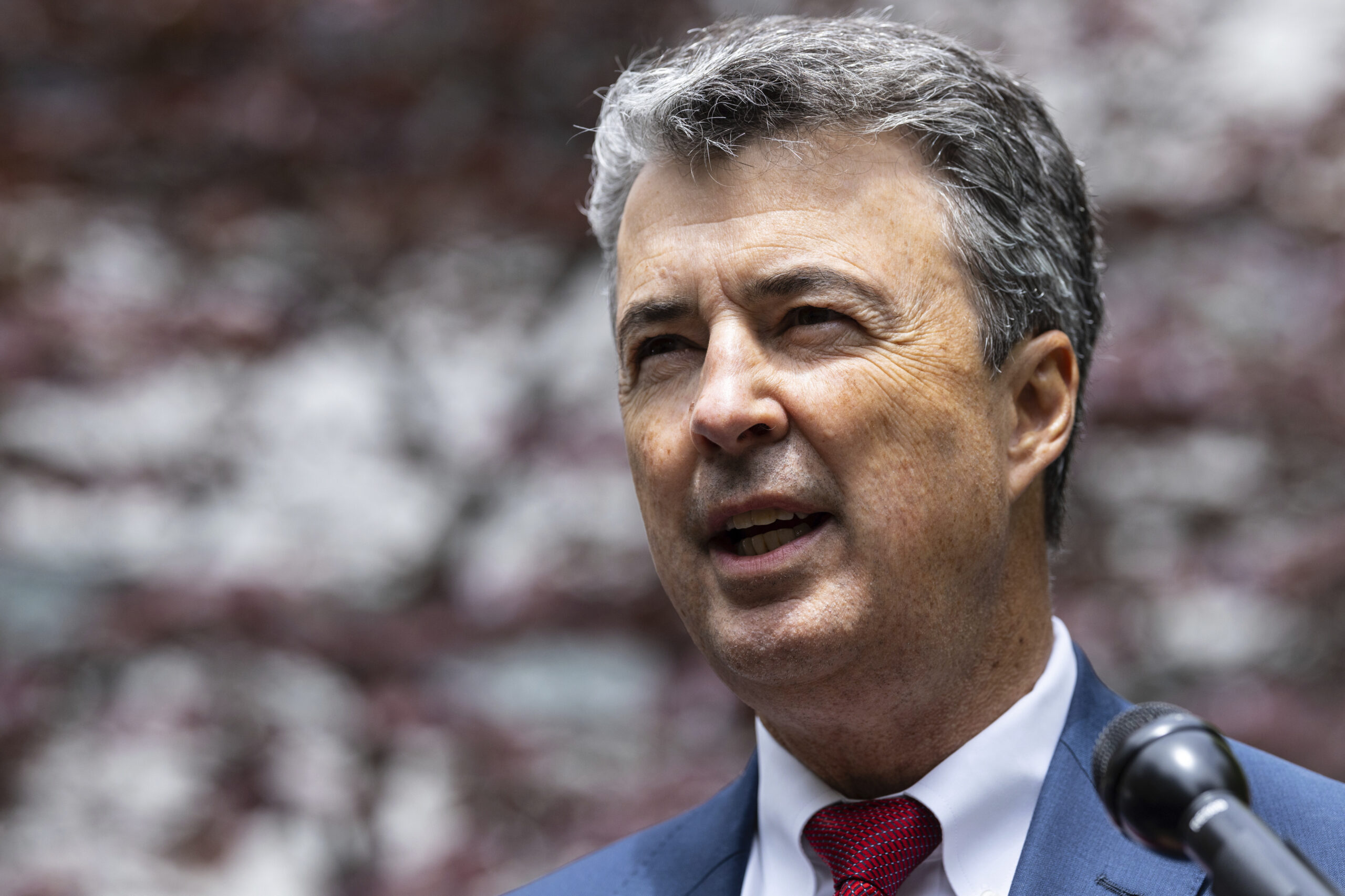
Alabama Attorney General Files Motions to Lift Congressional Map Injunctions After Supreme Court Decision
Alabama Attorney General Steve Marshall has filed urgent motions asking federal courts to lift injunctions blocking the state’s 2026 congressional map, following a landmark U.S. Supreme Court ruling that reshaped the legal landscape on racial gerrymandering.
The Supreme Court’s recent decision struck down Louisiana’s creation of a second majority-Black congressional district as an unconstitutional racial gerrymander, effectively weakening key provisions of the Voting Rights Act. Alabama officials swiftly responded by seeking relief in three major redistricting cases—Allen v. Singleton, Allen v. Milligan, and Allen v. Caster—to reinstate the state’s original congressional map drawn earlier this year.
Key Supreme Court Ruling Sparks Immediate Legal Moves in Alabama
Attorney General Marshall highlighted the significance of the ruling in a statement, emphasizing the court’s clarification that race and politics cannot be assumed to be the same without explicit proof. “The Supreme Court has now made clear that you cannot assume race and politics are the same thing, you have to actually show they’re separate,” Marshall said. “Because the lower court’s injunction cannot stand following the Supreme Court’s ruling, we have asked the court to lift the injunction. Alabama deserves the right to use its own maps, just like every other state,” he added.
This legal turn follows a history of challenges against Alabama’s congressional districts. A federal three-judge panel in 2022 ruled that Alabama’s map likely violated the Voting Rights Act by failing to create a second majority-Black district, ordering the state to redraw its lines. Though the U.S. Supreme Court initially upheld the panel’s decision in a close 5-4 vote, the maps drawn by Alabama lawmakers were later rejected for not approximating a majority-Black district sufficiently. Consequently, the federal panel imposed a new map that shifted boundaries in Alabama’s 2nd Congressional District to raise its Black voting-age population to 48.7%.
Governor Ivey Expresses Confidence in State’s Position
Governor Kay Ivey issued a statement soon after the motions were filed, signaling strong support for the state’s efforts. “Alabama knows our state, our people and our districts better than the federal courts or activists groups. I remain hopeful that Alabama receives a favorable ruling,” the statement read.
The state’s push to overturn federal injunctions and reinstate its original congressional map underscores a broader national shift as the Supreme Court continues to rein in previously broad voting rights protections.
What This Means for Alabama Voters and the 2026 Election Cycle
If courts grant Alabama’s request and lift the injunctions, the state will proceed using the 2026 congressional map as drawn by state lawmakers, potentially altering district demographics and voting dynamics just ahead of upcoming elections. This development may also set precedent for other states facing similar legal battles over redistricting and minority voting rights.
Legal experts and civil rights advocates are watching closely as Alabama’s case moves forward, with potential impacts extending nationwide amid ongoing debates over race, representation, and voting laws.
For now, Alabama’s political landscape is in rapid flux as the state seeks to regain control over how its congressional districts are drawn and contested at the federal level.
Stay Tuned for Updates
The Alabama Report will provide immediate updates as new rulings or filings emerge in this critical legal tug-of-war over congressional maps.